

A Case for Vivek Banzal – ‘Royal Protocol’ Row: BSNL Director Charge-Sheeted – Has the Ministry Allowed Media Trial to escape criticism?
Has the Ministry jumped the gun? And has the real source of the controversial SOP escaped scrutiny?

I Am the Judge, Jury and Executioner?’ Ministry’s Move in BSNL Row Under Scrutiny
The controversy surrounding the alleged “royal protocol” arrangements during a visit of Bharat Sanchar Nigam Limited (BSNL) Director Vivek Banzal has now taken a serious administrative turn, with the Ministry reportedly issuing a charge sheet to the senior official.
However, the development has triggered a larger debate within PSU and bureaucratic circles: has the Ministry acted under public and media pressure rather than establishing institutional responsibility through a comprehensive inquiry?
When Perception Drives Action
Media trials are hardly new in India. Once reports circulate widely, institutions often face intense public scrutiny and are expected to demonstrate swift corrective action. In many cases, disciplinary steps are seen as signals meant to reassure public opinion rather than outcomes of a fully established chain of accountability.
The present episode appears to raise similar concerns.
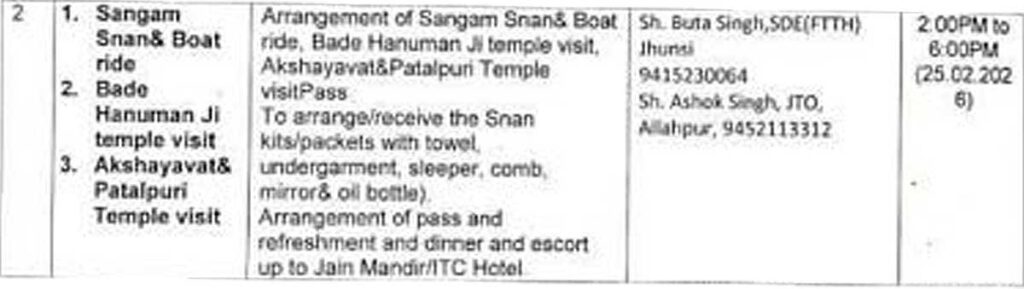
An earlier report published by www.indianpsu.com on February 23 cited internal communications dated February 19, allegedly issued by a “senior BSNL officer”, assigning duties to more than 50 officials during the Director’s visit to Prayagraj. The document reportedly mapped the entire schedule — including logistics, movement coordination, religious visits, and arrangements at the Sangam.
The controversy escalated after details surfaced suggesting that the Standard Operating Procedure (SOP) included highly personal arrangements such as towels, slippers, bath kits, combs, and other personal-use items. Critics described the instructions as excessive and inappropriate for a public sector visit.
The Core Question: Who Drafted the SOP?
The central issue now being debated is not merely the contents of the SOP, but its origin and approval process.
Several questions arise:
- Did the Director personally draft or approve the SOP?
- Was the document prepared at the field or circle level as part of local protocol planning?
- Were senior headquarters officials aware of the level of detail included?
- Has responsibility been fixed at the correct administrative level?
Available indications suggest the SOP may have originated within the Uttar Pradesh unit responsible for local coordination. If so, observers argue that accountability must extend to those who conceptualised and issued the instructions rather than presuming demand from the visiting official.
Administrative Reality vs Public Perception
Senior PSU executives typically operate within structured protocol frameworks prepared by local units. Such arrangements are often made without direct involvement of visiting dignitaries, especially in large organizations where field offices manage logistics independently.
This has led some insiders to question whether attributing intent to the visiting Director without establishing documentary approval risks creating an impression of punitive action driven by optics.
Has the Ministry Jumped the Gun?
The Ministry’s decision to issue a charge sheet, critics argue, may appear premature if a detailed fact-finding exercise has not conclusively identified:
- who authored the SOP,
- who authorised its circulation,
- and whether any instructions originated from the Director’s office.
Administrative law experts often caution that disciplinary proceedings must rest on demonstrable responsibility rather than inferred accountability arising from public controversy.
The Need for Institutional Clarity
The episode highlights a recurring governance challenge in large PSUs — over-zealous protocol culture at operational levels combined with reputational risks at leadership levels.
If procedural lapses occurred, the corrective response, many believe, should address systemic gaps rather than focus solely on an individual.
A transparent review identifying the exact chain of decision-making could help restore credibility — both for the Ministry and for the organization.
As the old adage goes, institutions must ensure that accountability follows evidence, not merely perception.