

SAIL’s Whistleblower Row: Policy on Paper, Silence in Practice? SAIL Faces Tough Governance Questions!!!
Allegations of Vigil Mechanism Lapses Raise Accountability Concerns
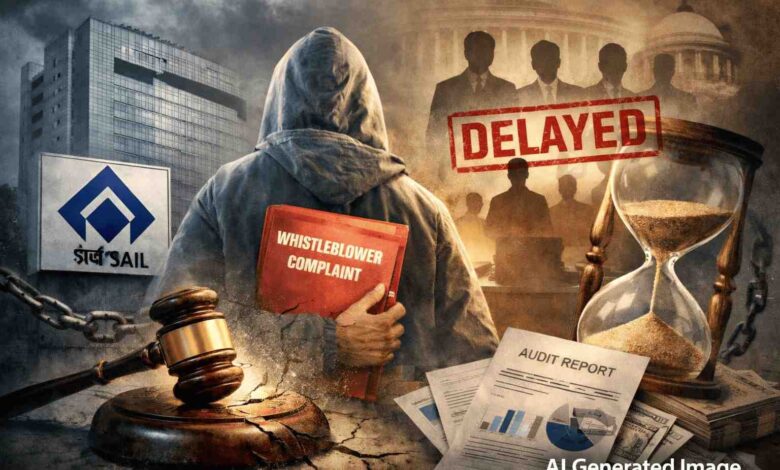
Serious questions relating to corporate governance practices at Steel Authority of India Limited (SAIL) have surfaced following allegations that a whistleblower complaint filed under the company’s Vigil Mechanism has remained unresolved for an extended period, despite policy-mandated timelines.
The matter relates to a complaint submitted on May 1, 2023, by whistleblower Rajeev Bhatia, who alleged victimization and harassment after reportedly flagging irregularities involving transactions estimated at around ₹400 crore. According to documents reviewed by www.indianpsu.com – the complaint continues to remain pending well beyond the six-month resolution period prescribed under SAIL’s own Vigil Mechanism Policy.
Policy Framework Exists — Implementation Questioned
SAIL’s Vigil Mechanism Policy, published on its official website, derives authority from statutory and regulatory provisions including:
- Sections 177(9) and 177(10) of the Companies Act, 2013
- SEBI Listing Obligations and Disclosure Requirements (LODR) regulations relating to whistleblower protection
- Department of Public Enterprises (DPE) Corporate Governance Guidelines for CPSEs
The policy provides safeguards against victimization and guarantees that complainants should receive a final decision within six months, or at minimum, an interim status communication.
Sources familiar with the case claim that neither a final decision nor periodic status updates were communicated within the stipulated timeline.
Audit Certifications Under Scrutiny
Concerns have also been raised regarding Secretarial Audit certifications issued for FY 2023-24 and FY 2024-25, which recorded compliance with SEBI LODR norms and DPE governance guidelines.
The audit reports, issued by Agarwal S. & Associates, acknowledged disciplinary actions taken in January 2024 against certain senior officials following directions from the Ministry of Steel, including suspensions later revoked in June 2024. However, critics argue that the audit observations did not address alleged non-compliance relating to the pending whistleblower complaint connected to the same broader controversy.
This has triggered debate over whether procedural compliance was certified despite unresolved governance concerns.
Multiple Authorities Approached
It is learnt that the complainant reportedly approached several institutional authorities, including:
- Chairperson of the Audit Committee
- Designated Vigil Mechanism Authority within SAIL
- Independent Directors and Government Nominee Directors
- Officials in the Ministry of Corporate Affairs and Ministry of Steel
- Registrar of Companies, Delhi
According to representations cited by sources, responses were either not received or were viewed by the complainant as inadequate.
Allegations of Retaliatory Action
The whistleblower has alleged that disciplinary action, including prolonged suspension followed by premature retirement under FR 56(j), amounted to retaliatory measures. These claims have not been independently verified, and SAIL has not publicly responded to the specific allegations at the time of publication.
Observers note that whistleblower protection frameworks were strengthened in India precisely to prevent such situations and to encourage reporting of suspected wrongdoing without fear of reprisal.
Historical Reminder of Whistleblower Risks
The controversy has drawn comparisons in public discourse to the case of Satyendra Dubey, the National Highways Authority of India engineer whose killing in 2003 became a turning point in India’s whistleblower protection debate. Analysts caution, however, that such comparisons underline the importance of institutional safeguards rather than implying parallels in circumstance.
Governance Questions Remain
The episode raises broader questions:
- Are Vigil Mechanism provisions being implemented in spirit as well as form?
- Should audit certifications explicitly evaluate unresolved whistleblower cases?
- What accountability mechanisms exist when governance safeguards themselves are questioned?
Until official clarification emerges from SAIL or the Steel Ministry, the issue is likely to remain a test case for corporate governance standards in India’s public sector enterprises.