
Tejas Mastermind Kota Ravi Takes Over as HAL CMD, Signals Aggressive Push for Global Aerospace Leadership
New HAL chief inherits ₹2.54 lakh crore order book, delivery pressures and India’s biggest indigenous defence aviation ambitions
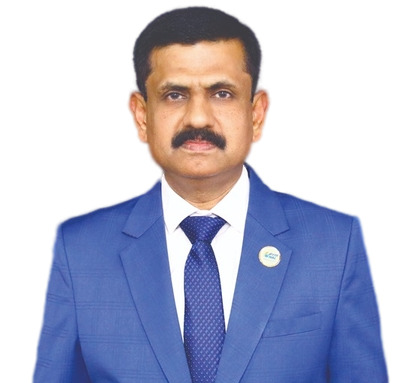
In a crucial leadership transition at a time when India’s defence aviation ecosystem is under unprecedented strategic scrutiny, Kota Ravi, popularly referred to as Ravi K, has assumed charge as the 22nd Chairman and Managing Director of Hindustan Aeronautics Limited, India’s aerospace and defence manufacturing giant.
He succeeds Dr. D.K. Sunil, who superannuated on April 30, and steps into the corner office when HAL is balancing a massive committed order pipeline, heightened delivery expectations from the armed forces, and New Delhi’s intensified push for defence indigenisation.
More importantly, Kota Ravi is not a ceremonial continuity appointment.
Within HAL and the wider defence establishment, he is regarded as one of the principal operational architects behind the scaling up of the indigenous LCA Tejas programme and the execution framework for the LCH Prachand fleet — two flagship symbols of India’s Atmanirbhar defence manufacturing narrative.
HAL Gets an Insider Who Knows the Factory Floor
Unlike many top PSU transitions that remain largely administrative, Kota Ravi’s elevation carries operational significance.
Having served as Director (Operations) and earlier as Executive Director & General Manager of the Tejas Division, he comes with more than 30 years of hands-on experience across aerospace manufacturing, defence electronics, systems integration, production planning and customer support.
A Mechanical Engineering graduate from Malnad College of Engineering, Karnataka, he is also an alumnus of Indian Institute of Management Ahmedabad and ISAE, Toulouse, France — giving him a blend of shop-floor engineering and strategic management credentials rarely seen in defence PSUs.
He is also serving as Nominee Director on the board of Multi Role Transport Aircraft Limited.
Officials familiar with HAL’s internal dynamics say the government has effectively chosen “an execution man” at a time when HAL cannot afford programme slippages.
The Tejas and Prachand Delivery Commander
Kota Ravi’s strongest credential is his direct association with HAL’s biggest military production commitments.
Under his watch, HAL concluded and operationally aligned:
- supply contract for 180 LCA Tejas fighter aircraft for the Indian Air Force,
- supply of 156 LCH Prachand helicopters for the Indian Army and Indian Air Force.
These are not merely contracts on paper.
Together they represent the backbone of India’s future indigenous tactical air combat capability and rotorcraft warfare preparedness.
Within the Indian Air Force ecosystem, Kota Ravi is widely credited with pushing customer-interface reforms that improved fleet serviceability, introduced seamless data connectivity with air bases, and established a Single Point of Contact support mechanism to reduce operational downtime.
For a PSU frequently criticised in the past for production bottlenecks and after-sales delays, this customer-facing shift marked a strategic behavioural change.
Driving Indigenous Depth, Not Just Indigenous Assembly
Defence analysts note that Kota Ravi’s contribution was not confined to contract closure.
He played a substantial role in deepening localisation inside the Tejas ecosystem by:
- increasing domestic vendor participation,
- reducing import dependence on structural assemblies,
- expanding production capability at HAL’s Nashik complex, and
- creating a parallel vendor-supported manufacturing chain.
One of his most significant moves was outsourcing major fuselage assemblies and critical sub-structures to capable private sector partners — a step that helped HAL transition from a traditional monolithic PSU production model to a distributed aerospace manufacturing ecosystem.
This is now beginning to yield measurable delivery gains.
That policy shift is strategically important because HAL’s future cannot be sustained on captive in-house production alone, particularly when the order book has swollen to approximately ₹2.54 lakh crore.
HAL’s New CMD Faces a Harder Challenge Than His Predecessors
While Kota Ravi enters office with strong technical credibility, he also inherits one of the toughest operational phases in HAL’s history.
Among the immediate pressures before him:
- Tejas Mk1A delivery acceleration,
- LCH Prachand serial production ramp-up,
- Su-30 upgrade commitments,
- aero-engine integration bottlenecks,
- private vendor synchronisation,
- MRO expansion,
- civil aerospace diversification,
- and increasingly strict scrutiny from the Ministry of Defence over execution timelines.
HAL today is no longer judged only by order wins.
It is being judged by quarterly physical deliveries.
And that changes the game entirely.
The armed forces, particularly the Indian Air Force, now expect HAL to function less like a protected PSU and more like a globally benchmarked aerospace integrator.
AI, Innovation and Global Competition: Ravi K’s Public Vision
In his first formal remarks after assuming charge, Kota Ravi made it clear that he wants HAL’s next chapter to be defined by:
- innovation-led manufacturing,
- Artificial Intelligence integration,
- operational excellence,
- people-centric productivity,
- and global competitiveness.
His stated ambition is to transform HAL from being merely India’s defence aircraft producer into a globally respected aerospace and defence enterprise.
That aspiration is significant.
Because despite HAL’s dominant domestic position, the company still faces longstanding questions over export agility, programme turnaround speed, technology partnerships and global supply-chain competitiveness.
Kota Ravi’s tenure will therefore be measured not simply by announcements, but by whether HAL can deliver aircraft and helicopters faster, cheaper, with higher indigenous content and stronger international credibility.