Chokepoints Pose Persistent Energy Security Risks for Oil and LNG Importers: E3G Report
The report highlights that chokepoints such as the Strait of Hormuz continue to pose recurring risks, regardless of overall supply levels
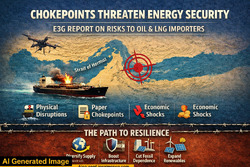
Global energy markets may appear well-supplied, but a new analysis by E3G warns that fossil fuel importers remain structurally vulnerable due to chokepoints—critical transit routes that can disrupt supply chains at any time.
The report highlights that chokepoints such as the Strait of Hormuz continue to pose recurring risks, regardless of overall supply levels. Even in times of market abundance, oil and LNG flows depend on a limited number of routes, making disruptions inevitable.
Structural Risk That Cannot Be Avoided
According to E3G, chokepoint risks are not temporary anomalies but a built-in feature of global oil and gas trade. Events in the Middle East underscore how quickly disruptions can escalate, affecting global supply chains and triggering price volatility.
Import-dependent economies in Europe and Asia—including India, China, Japan, and South Korea—are particularly exposed. The report stresses that no country is entirely immune, even if vulnerability levels differ.
Beyond Physical Disruptions: The Rise of “Paper Chokepoints”
The analysis introduces the concept of “paper chokepoints”—non-physical barriers that can disrupt supply just as severely. These include:
- Shipping constraints
- Insurance withdrawal
- Regulatory barriers
- Climate-related disruptions
Such factors can compound physical risks, tightening markets rapidly even without a direct blockage.
Global Ripple Effects and Economic Impact
Because oil and LNG markets are deeply interconnected, disruptions in one region can have cascading global effects. Supply shocks can lead to:
- Sharp price spikes
- Increased competition for cargoes
- Macroeconomic instability
For countries like India, sustained high oil prices can widen current account deficits, weaken currency stability, and strain public finances.
Energy Security Requires Reducing Exposure, Not Just Securing Supply
A key takeaway from the report is that energy security is less about securing more supply and more about reducing exposure to disruptions.
E3G argues that reliance on fossil fuels inherently ties countries to chokepoint risks. In contrast, clean energy systems—while not entirely risk-free—shift control closer to domestic infrastructure and reduce geopolitical dependence.
The 5-Track Toolkit for Resilience
The report outlines a five-track strategy for governments:
- Short-term shock management measures
- Medium-term system flexibility improvements
- Infrastructure protection and resilience
- Diversification of supply chains
- Long-term reduction in fossil fuel dependence
Among these, the most durable solution is reducing demand for imported oil and LNG through electrification, energy efficiency, and expansion of domestic renewable energy.
Clean Energy as a Strategic Shield
E3G emphasizes that while renewable energy systems also face supply chain risks, these are typically long-term and diminish as more capacity is installed.
“Renewables and energy efficiency are the only realistic way to escape this crisis loop,” said Richard Smith, Senior Policy Advisor at E3G.
Maria Pastukhova added that energy systems underpin national security, but many countries rely on infrastructure beyond their control—making them inherently vulnerable.
Madhura Joshi highlighted Asia’s exposure, noting that nearly 90% of oil and LNG passing through Hormuz is destined for the region, making economies like India particularly sensitive to prolonged disruptions.
Conclusion
The report delivers a clear message: in a geopolitically volatile and geographically constrained world, fossil fuel dependence guarantees recurring energy security risks. Transitioning to clean energy is no longer just a climate imperative—it is a strategic necessity.
The writer of this article is Dr. Seema Javed, an environmentalist & a communications professional in the field of climate and energy