Global Steelmakers Lag on Decarbonisation, None Ready for Near-Zero Transition: SteelWatch Report
The first-ever SteelWatch Corporate Scorecard, released on Wednesday, evaluated 18 major iron and steel producers operating across 11 countries and 29 regions
A new global assessment by SteelWatch has revealed that the world’s leading steelmakers are failing to make adequate progress toward decarbonisation, with none currently prepared to transition to near-zero-emissions production.
The first-ever SteelWatch Corporate Scorecard, released on Wednesday, evaluated 18 major iron and steel producers operating across 11 countries and 29 regions. The findings highlight a significant gap between industry commitments and actual progress on climate action.
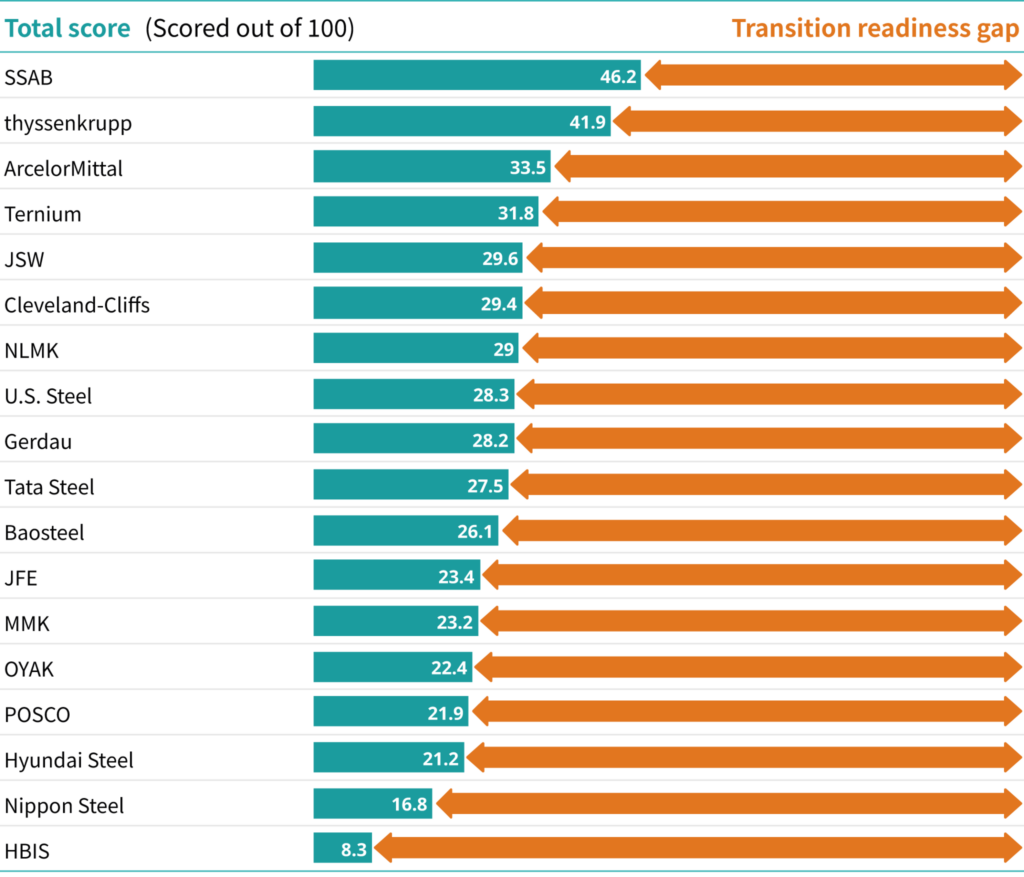
“Not a single steelmaker has scored above 50 out of 100, and even the highest performers still have major gaps to address before they can claim to be acting responsibly on climate change,” said Caroline Ashley, Executive Director of SteelWatch.
The steel sector is responsible for nearly 10 percent of global carbon dioxide emissions, making it a critical industry in the fight against climate change. However, the report notes that most companies continue to rely heavily on coal-based blast furnaces, a technology responsible for up to 90 percent of the sector’s emissions.
Among the companies assessed were major global players such as Baosteel, Nippon Steel, POSCO, Tata Steel, ArcelorMittal, thyssenkrupp, and Cleveland-Cliffs. The scorecard found that continued dependence on coal and the slow pace of scaling up green iron production are the primary barriers to progress.
The report identifies a “transition readiness gap” across the industry, reflecting the disconnect between long-term climate targets and the lack of concrete steps needed to achieve them. Despite widespread net-zero commitments, most companies are not on track to deliver meaningful emissions reductions at the required pace.
On performance, Sweden-based SSAB emerged as the top scorer with 46.2 points, followed by Germany’s thyssenkrupp with 41.9 points. Both companies have outlined plans to phase out blast furnaces and invest in green iron technologies, although implementation remains limited.
At the lower end of the rankings, Hyundai Steel, Nippon Steel, and China’s HBIS recorded some of the weakest scores, reflecting continued reliance on coal-based production and limited progress in renewable energy adoption and green iron development.
The scorecard also highlights that the average score for scaling green iron and renewable energy remains below one point out of 25, underscoring the lack of meaningful investment in low-emission technologies.
While the report notes some early signs of progress—such as the absence of new blast furnace construction in many cases and initial steps toward direct reduced iron capacity—it emphasizes that these measures fall far short of what is required.
SteelWatch has warned that without decisive action in this decade, the industry risks locking in high emissions for decades to come. The organisation stressed that companies must move beyond announcements and accelerate investments in clean technologies, particularly green hydrogen-based ironmaking and renewable-powered electric furnaces.
The SteelWatch Corporate Scorecard is based on publicly available company data, primarily drawn from annual reports for FY2025 reflecting FY2024 performance. The organisation stated it will continue to monitor and track improvements in the coming years.
Find the Scorecard at: www.steelwatch.org/scorecard
The writer of this article is Dr. Seema Javed, an environmentalist & a communications professional in the field of climate and energy