Indian Railways Nears 100% Electrification, Strengthening Energy Security Amid Global Oil Uncertainty
With over 70,000 kilometres of track and one of the highest passenger volumes globally, Indian Railways is now positioned to play a central role in India’s transition to a low-carbon economy
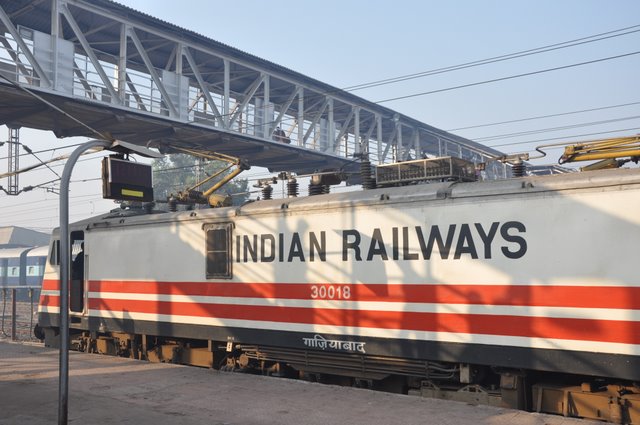
As geopolitical tensions in West Asia continue to disrupt global energy markets, India’s ambitious railway electrification programme is emerging as a major pillar of the country’s energy security strategy. With 99.4 per cent electrification already completed, Indian Railways is on the verge of achieving the historic milestone of 100 per cent electrification under Mission 100%, significantly reducing its dependence on imported crude oil.
Traditionally, Indian Railways relied heavily on diesel-powered locomotives, with diesel produced from imported crude oil. However, with India importing over 85 per cent of its crude oil requirements, fluctuations in global oil supply routes—particularly through the Strait of Hormuz—have long posed risks to the country’s energy stability. The current geopolitical tensions in West Asia have once again highlighted the vulnerability of global oil markets.
According to a report by Riding Sunbeams, railway electrification has already led to a significant reduction in diesel consumption. In the financial year 2024–25 alone, Indian Railways cut diesel usage by 178 crore litres, representing a 62 per cent reduction compared to 2016–17 levels.
This transformation places India among the global leaders in railway electrification. Out of 70,001 route kilometres of Broad Gauge network, 69,427 kilometres have already been electrified, leaving only a few sections across five states to be completed. Notably, nearly two-thirds of this electrification has been achieved in the last decade, reflecting an unprecedented pace of infrastructure transformation.
India’s electrification drive also compares favourably with other major rail economies. Very few countries have fully electrified railway networks, and the scale of the Indian system is remarkable. The network of Indian Railways is approximately thirteen times larger than that of Switzerland, the next largest fully electrified rail system.
Beyond energy security, electrification is also delivering major economic benefits. Electric traction—where trains draw power from overhead electric lines rather than diesel engines—is estimated to be around 70 per cent more economical than diesel traction. This transition not only lowers operational costs but also shields rail operations from global fossil fuel price volatility, helping maintain some of the world’s most affordable passenger fares.
The shift comes at a critical time when more than 26 million passengers travel daily on Indian Railways, making it one of the largest and most vital public transport networks in the world.
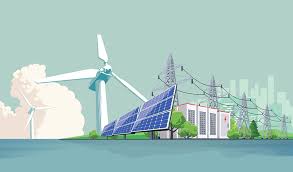
Electrification is also enabling deeper integration of renewable energy into railway operations. Installed solar capacity across railway assets has expanded dramatically—from just 3.68 MW in 2014 to nearly 898 MW by November 2025. Nearly 70 per cent of this capacity directly supports traction power, while solar installations now cover more than 2,600 railway stations, service buildings and operational facilities.
Indian Railways has also set an ambitious goal of becoming a net-zero carbon emitter by 2030, a target announced in March 2023. Achieving this goal will require further expansion of renewable energy procurement, alongside sustained electrification and improvements in energy efficiency. By the end of the decade, the organisation’s energy demand is projected to exceed 10 gigawatts, with the majority expected to come from renewable sources.
Speaking at a high-level roundtable on long-haul freight decarbonisation hosted by Riding Sunbeams during Delhi Climate Innovation Week 2026, Rahul Kapoor, Executive Director Finance at the Railway Board and Director Finance at the Dedicated Freight Corridor Corporation of India Ltd, emphasised the need for a coordinated national approach.
“Policy cannot be looked at in isolation. To scale up islands of excellence happening all over India, an overall structured approach that considers technology, policy ecosystem, human resource, economics and livelihoods is required,” Kapoor said.
Echoing this view, Leo Murray, Chief Executive of Riding Sunbeams, noted that India’s rail electrification programme is setting a global benchmark for climate-aligned infrastructure.
“By electrifying its entire railway network and committing to net zero by 2030, India is demonstrating how infrastructure strategy can strengthen both climate ambition and energy security,” Murray said.
Mahak Agrawal, India Lead for Riding Sunbeams, described railway electrification as a key driver of India’s broader economic transformation.
“Rail electrification in India is not simply a technical upgrade. It represents a structural shift linking industrial strategy, clean power markets, public finance, skills development and affordable mobility,” she said.
With over 70,000 kilometres of track and one of the highest passenger volumes globally, Indian Railways is now positioned to play a central role in India’s transition to a low-carbon economy. The final push towards 100 per cent electrification is expected to unlock new opportunities in renewable energy procurement, green freight corridors, grid innovation and sustainable infrastructure financing.
As global energy markets remain volatile, India’s rail electrification journey demonstrates how large public systems can modernise rapidly while strengthening economic resilience, energy security and climate commitments.
The writer of this article is Dr. Seema Javed, an environmentalist & a communications professional in the field of climate and energy