
Indian Steel Sector Sustains Growth in April 2026; Prices Rebound Across Segments
Crude steel production reached 14.09 million tonnes, registering a 5.8% year-on-year (YoY) increase over April 2025
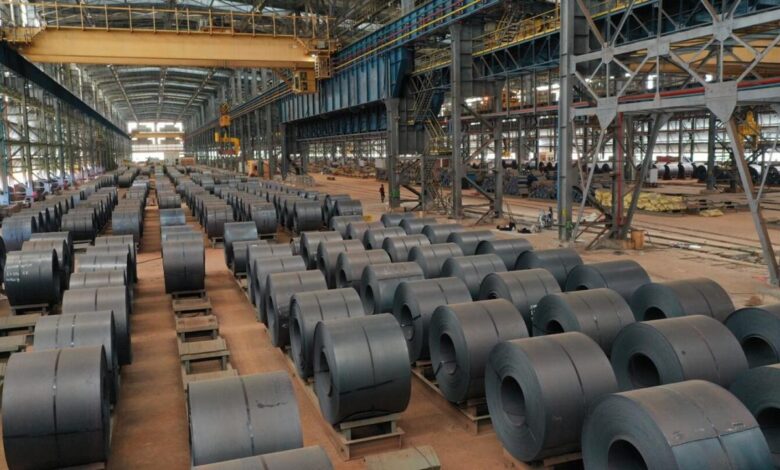
India’s steel industry continued its steady growth trajectory in April 2026, supported by resilient domestic demand, rising infrastructure activity, and improving price realization across key product categories. The latest provisional data indicates that the sector remains firmly on track despite global uncertainties and input cost pressures.
Production and Consumption Stay Strong
Crude steel production reached 14.09 million tonnes, registering a 5.8% year-on-year (YoY) increase over April 2025. Growth remained broad-based, with:
- Hot metal production rising 5.4% YoY
- Finished steel output at 13.05 million tonnes, up 3.4% YoY
- Consumption touching 12.99 million tonnes, marking a strong 8.1% YoY growth
The higher consumption growth relative to production reflects sustained demand from construction, infrastructure, and manufacturing sectors, reinforcing the domestic demand-driven nature of India’s steel story.
However, pig iron output declined by 6% YoY to 0.69 million tonnes, indicating some softness in specific downstream segments.
Trade Trends: India Remains a Net Importer
India remained a marginal net importer of steel in April 2026:
- Imports: 0.68 million tonnes (+30.8% YoY)
- Exports: 0.47 million tonnes (+24.9% YoY)
The sharper rise in imports signals competitive global pricing pressures, particularly from Asian markets, even as exports also showed healthy growth.
Capacity Expansion Gains Pace
India’s steel capacity has reached approximately 220 MTPA in FY 2025–26, moving steadily toward the 300 MTPA target under the National Steel Policy by 2030.
Key industry players such as Steel Authority of India Limited, Tata Steel, JSW Steel, Jindal Steel & Power, and ArcelorMittal Nippon Steel India continued to push expansion plans.
A notable development is Tata Steel’s commissioning of a ₹3,200 crore scrap-based Electric Arc Furnace (EAF) plant in Ludhiana (0.75 MTPA)—a major step toward low-carbon “green steel” production in India.
Green Steel Push Gains Traction
Under the Ministry of Steel’s green steel initiative, the National Institute of Secondary Steel Technology (NISST) has emerged as a key certification body.
- 90 producers across 15 states certified as of March 2026
- Products include TMT bars, HR/CR coils, wire rods, and pipes
- Majority achieving 5-star green ratings
This signals a strong shift toward decarbonization, especially among secondary and mid-sized producers, aligning India’s steel sector with global ESG trends.
Steel Prices Rebound Across Categories
April 2026 saw a broad-based recovery in steel prices, marking a turnaround after months of softness:
- TMT/Rebar: ↑ ~2.6% MoM, ↑ ~3% YoY
- Hot Rolled Coil (HRC): ↑ ~6.3% MoM
- Galvanized Plain (GP) sheets: ↑ ~7.3% MoM
The price recovery reflects improving demand conditions, particularly in infrastructure and construction, alongside better inventory alignment.
Raw Material Costs: Mixed but Firm
Input costs remained a key variable:
- Iron ore (domestic): ↑ ~10–11% MoM (led by NMDC Limited price hikes)
- Seaborne iron ore: Stable
- Coking coal: Continued upward pressure globally
- Scrap prices: Largely flat
This divergence benefits electric route (EAF) producers while keeping BF-BOF players under cost pressure.
Outlook: Growth Intact, Risks Remain
The Indian steel sector remains well-positioned for sustained growth, driven by:
- Continued government infrastructure push
- Expanding manufacturing base
- Rising urbanization demand
However, key challenges persist:
- Volatility in raw material costs
- Energy security concerns
- Global trade dynamics and import pressures
Overall, April 2026 reinforces the sector’s structural strength, with domestic demand continuing to act as the primary growth engine.