

REC Q4 Profit Slumps 22% to ₹3,375 Crore, But FY26 Ends With Record ₹16,308 Crore Net Profit
Maharatna PSU lender REC reports weak March-quarter earnings amid lower interest income, but closes FY26 with its highest-ever annual profit, record loan book and ₹18.55 per share total dividend
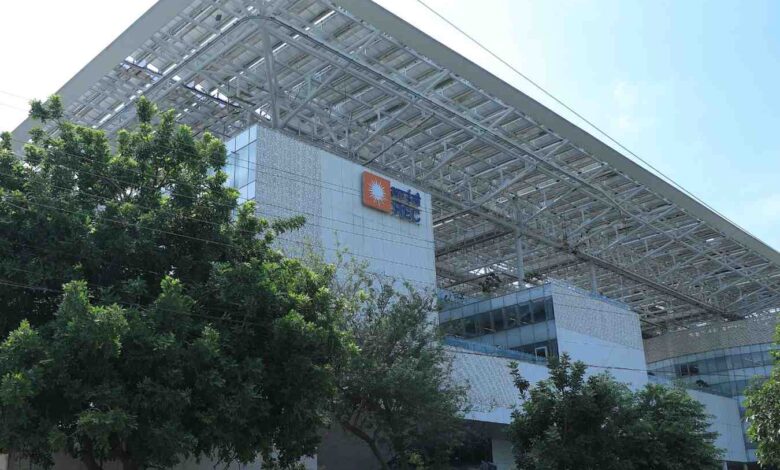
Maharatna public sector lender REC Limited reported a 22 per cent year-on-year decline in consolidated net profit for the March quarter at ₹3,375.08 crore, as lower interest income and higher expenses weighed on quarterly earnings. However, the company closed FY2025-26 on a historic note, posting its highest-ever annual net profit of ₹16,308.17 crore, reflecting sustained lending growth and a strong balance sheet.
The state-run infrastructure financier had posted a consolidated net profit of ₹4,309.98 crore in the corresponding January–March quarter of the previous financial year. The sharp decline in quarterly profitability came despite continued expansion in its loan assets, indicating margin pressure in the final quarter of the fiscal.
REC’s total income during Q4 FY26 slipped to ₹14,583.39 crore from ₹15,348.37 crore in the year-ago period. The moderation was primarily driven by a fall in interest income — the company’s principal revenue source — which dropped to ₹14,119.11 crore from ₹14,947.26 crore in the corresponding quarter last year.
At the same time, REC’s expenses moved higher to ₹10,168.85 crore compared with ₹9,858.48 crore in Q4 FY25, further squeezing quarterly profit margins.
The March quarter numbers indicate that while the company maintained lending traction, earnings were impacted by softer yield realization and increased cost pressure during the period.
Annual performance shines despite Q4 softness
While the January–March quarter disappointed on the profitability front, REC’s full-year numbers underscored the company’s resilience and operational strength.
For the financial year ended March 31, 2026, REC reported a consolidated net profit of ₹16,308.17 crore, up from ₹15,884.23 crore in FY25 — marking the highest annual profit in the company’s history.
Total income for the year rose to ₹59,628.35 crore against ₹55,105.20 crore in the previous fiscal, supported by strong loan growth and sustained infrastructure financing demand.
Interest income for FY26 climbed to ₹57,860.49 crore, reflecting healthy expansion in the company’s lending operations across power, infrastructure and emerging clean energy segments.
REC said the record annual performance was achieved despite a volatile macroeconomic backdrop, global geopolitical uncertainty and fluctuating financial market conditions.
The company described FY26 as a year of “resilient operational delivery and strategic business expansion,” adding that it remained focused on financing India’s power transition and infrastructure build-out.
Loan book touches all-time high of ₹5.84 lakh crore
One of the strongest indicators of REC’s continued growth was the sharp rise in its loan assets.
The company’s total loan book expanded by nearly ₹17,000 crore during FY26 to reach an all-time high of ₹5.84 lakh crore as on March 31, 2026. This growth reflects robust demand for long-term project financing from the power generation, transmission, distribution and infrastructure sectors.
REC has in recent years aggressively diversified beyond conventional thermal and transmission projects and is increasingly positioning itself as a major lender in renewable energy, green mobility and infrastructure-linked financing.
That strategy was visible in FY26 numbers as well.
Renewable energy financing surges 30%
REC’s renewable energy portfolio emerged as one of the fastest-growing segments during the year.
Its renewable energy loan book rose 30 per cent year-on-year to ₹75,347 crore, underlining the accelerating pace of financing towards solar, wind, pumped storage, battery energy storage systems, green hydrogen and other clean energy projects.
The growth is significant as India’s energy transition plans gather pace and state-owned financiers like REC and Power Finance Corporation continue to play a central role in funding the country’s massive generation and grid modernisation pipeline.
Analysts say REC’s increasing tilt toward renewable and transition financing gives it stronger long-term growth visibility even if conventional lending yields witness moderation.
Sanctions, disbursements and net worth rise strongly
Operationally too, REC posted healthy year-on-year growth across major lending metrics.
Total loan sanctions during FY26 rose 21 per cent to ₹4,09,097 crore, reflecting sustained project pipeline creation and fresh approvals in the power and infrastructure ecosystem.
Loan disbursements increased 10 per cent to ₹2,11,189 crore, indicating continued execution momentum and improved project funding deployment.
Meanwhile, the company’s net worth strengthened 9 per cent to ₹84,290 crore from ₹77,638 crore a year ago, enhancing its capital adequacy and lending capacity.
A stronger net worth base is crucial as REC prepares for larger borrowing programmes and expanded financing commitments in FY27, particularly in renewable energy corridors, transmission strengthening, battery storage and state utility reforms.
Board recommends final dividend; total FY26 payout at ₹18.55/share
In a positive development for shareholders, REC’s Board of Directors recommended a final dividend of ₹1.55 per equity share for FY26.
With this, the total dividend declared by the company for the entire financial year stands at ₹18.55 per share, reinforcing REC’s position as one of the most consistent dividend-paying public sector financial institutions in the country.
The dividend recommendation will be subject to shareholder approval at the company’s upcoming Annual General Meeting.
Outlook remains robust
Despite the weak fourth-quarter earnings print, REC’s annual record profit, expanding loan book, rising renewable exposure and stronger sanctions pipeline suggest that the company remains on a structurally strong growth path.
With India pushing aggressively on electricity demand expansion, transmission modernisation, battery storage, green hydrogen and distribution reforms, REC is expected to remain one of the principal financiers of the country’s infrastructure transformation story.
Quarterly profitability may have softened, but FY26 has once again confirmed one thing clearly — REC’s long-term lending engine is still running at full power.