Renewable Energy Can Become a Strong Insulator Against Geopolitical Disruptions
Despite this rapid progress, the pace of renewable expansion still falls short of what is required to meet global climate goals
As the crisis in West Asia—triggered by the ongoing U.S.-Israeli conflict with Iran—continues to escalate, global oil and gas prices have surged sharply due to disruptions in energy exports from the Middle East.
Oil prices recently settled 4.7% higher, reaching their highest level since January 2025. The benchmark Brent crude rose $3.66 to $81.40 per barrel, reflecting growing fears of a prolonged conflict in a region that remains central to global energy supplies.
European gas prices have also experienced extreme volatility, rising by as much as 40% before easing slightly. The ripple effects of the conflict are being felt across commodity markets as well, with sugar, fertilizer, and soy prices rising amid disruptions to shipping routes. Tehran’s attacks on ships and the closure of navigation routes in the Gulf have forced production stoppages across key energy exporters, from Qatar to Iraq.
Strategic Importance of the Strait of Hormuz
At the heart of this crisis lies the Strait of Hormuz, located between Oman and Iran. This narrow waterway serves as one of the most critical energy chokepoints in the world.
Nearly 20% of global oil supply passes through this route, including exports from Saudi Arabia, the United Arab Emirates, Iraq, Kuwait, and Iran, along with massive volumes of liquefied natural gas (LNG) from Qatar. Any disruption to shipping in this region has immediate global repercussions, particularly for Europe and Asia, which depend heavily on energy imports from the Gulf.
Recent attacks on commercial vessels in the Gulf have further intensified concerns about the security of fuel and petroleum supplies.
Lessons From Previous Energy Disruptions
Geopolitical tensions have repeatedly exposed the vulnerabilities of fossil fuel–dependent energy systems.
- In 2020, China’s unofficial coal import ban on Australia caused global supply disruptions and price spikes.
- In 2022, the Russia-Ukraine war forced the European Union to rapidly diversify energy supplies after reducing dependence on Russian gas, driving up global prices and pushing several South Asian and Southeast Asian countries out of the market.
- Now in 2026, tensions around the Strait of Hormuz threaten to disrupt nearly 20% of global oil and gas flows.
Given that the broader Gulf region accounts for roughly one-third of global oil production and nearly one-fifth of natural gas output, instability in this region can trigger widespread energy crises across Europe and Asia.
Europe’s increasing dependence on Gulf energy supplies—after shifting away from Russian energy—has made the region particularly vulnerable to such geopolitical shocks.
Renewable Energy as a Strategic Buffer
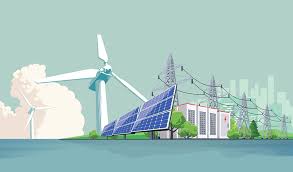
In this volatile environment, renewable energy and electrified power systems offer a powerful strategic buffer against geopolitical disruptions.
Unlike fossil fuels, renewable energy sources such as solar, wind, and hydropower are domestically available in most countries. Expanding renewable energy reduces reliance on imported fuels that are vulnerable to political conflicts, supply shocks, and price volatility.
A decentralized energy system powered by renewables also enhances resilience. Distributed generation—where multiple producers contribute to the energy grid—ensures that shocks to any single source have limited impact on overall energy security.
For many countries in Europe and Asia, accelerating the transition toward renewables is becoming not just a climate priority but also a strategic economic and security imperative.
Geopolitical Risks Accelerating the Energy Transition
Interestingly, geopolitical crises are increasingly acting as catalysts for renewable energy adoption.
When the Russia-Ukraine war began in 2022, many analysts feared it might slow the global energy transition. Instead, it accelerated investments in clean energy, as governments realized the vulnerability of fossil-fuel-dependent systems.
A more distributed and diversified energy ecosystem with multiple actors and sources can absorb shocks far better than centralized fossil-fuel supply chains.
This shift is already visible in global renewable deployment.
According to the International Renewable Energy Agency (IRENA), the world installed 585 gigawatts of new renewable energy capacity in the past year alone. Remarkably, renewables accounted for almost 90% of global power capacity additions, marking a historic milestone in the energy transition.
The Road Ahead
Despite this rapid progress, the pace of renewable expansion still falls short of what is required to meet global climate goals.
To keep global warming within 1.5°C, the world needs significantly greater ambition and faster deployment, particularly among G20+ economies, which account for the majority of global emissions and energy consumption.
The current geopolitical turbulence serves as a powerful reminder that energy security and climate action are deeply interconnected. By accelerating the transition to renewable energy, countries can not only combat climate change but also shield their economies from the volatility of global fossil-fuel markets.
In an era defined by geopolitical uncertainty, renewable energy may well prove to be the strongest insulator against future energy crises.
The writer of this article is Dr. Seema Javed, an environmentalist & a communications professional in the field of climate and energy