SAIL: When the Rulebook Becomes Optional, CDA Rules Forgotten Altogether
Following footsteps of Director (Commercial), Interim CMD SAIL, K.K. Singh also blocks our number!

There are moments in the life of a public institution when silence becomes complicity. The unfolding developments within Steel Authority of India Limited (SAIL) appear to be one such moment—where the rulebook exists, but its application seems increasingly optional.
The Conduct, Discipline and Appeal (CDA) Rules of SAIL were not drafted as ornamental guidelines. Instituted with the approval of the Government of India, these rules were meant to ensure accountability, enforce discipline, and safeguard public resources. They clearly mandate that any loss caused due to negligence must be investigated through due process—charge memo, departmental inquiry, and only then, action.
Yet, what is being witnessed today appears to be a systematic dilution of these very principles.
A Case That Raises More Questions Than Answers
In January 2024, serious allegations of irregularities in commercial dealings surfaced from within SAIL itself. A senior insider flagged concerns that pointed toward policy manipulation, undue favoritism, and potential financial losses.
The response from the Ministry of Steel was swift—29 officials, including senior-most executives, were placed under suspension. The matter was serious enough for the Central Bureau of Investigation (CBI) to step in.
But what followed was not accountability—it was ambiguity.
By June 2024, the suspensions were revoked. The same officials returned, not to the sidelines, but to positions of influence. Some even reportedly advanced in their careers.
At the same time, the individual who raised the alarm was shown the door.
This contrast is stark. It is also deeply unsettling.
Power Without Accountability
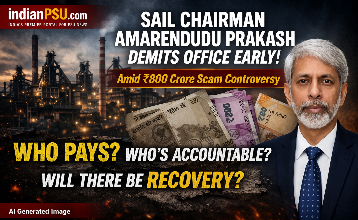
All of this unfolded under the leadership of Amarendu Prakash, the then Chairman and Managing Director. The decisions taken during this period merit scrutiny—not just for their administrative implications, but for what they signal about institutional intent.
Equally troubling are reports that SAIL resources were used to fund legal defenses for officials facing serious allegations. If true, this raises a fundamental question: can public money be used to shield individuals accused of causing loss to that very public institution?
If the answer is yes, then the implications go far beyond SAIL.
The Dangerous Precedent
Rules in any organization derive their strength not from documentation, but from enforcement. The SAIL CDA framework lays down:
- Defined procedures for disciplinary action
- Safeguards for fairness and due process
- Mechanisms for financial accountability
But when enforcement becomes selective, rules lose their meaning.
What message does it send when:
- Those under investigation return to power?
- Promotions follow pending inquiries?
- Whistleblowers face consequences instead of protection?
It sends a message that compliance is negotiable—and influence is decisive.
Fixing Responsibility Where It Belongs
At the end of the day, institutions act through individuals—and in SAIL’s case, those actions bear the unmistakable imprint of its outgoing CMD, Amarendu Prakash. The revocation of suspensions, reinstatement of officials to key positions, and reported decisions on legal expenditures did not occur in isolation.
While systems and structures may distribute roles, accountability cannot be diluted. Leadership is ultimately defined by the decisions taken under its watch—and the consequences that follow.
When rules are sidelined and accountability appears selective, responsibility cannot remain collective. It must be owned at the very top.
Who Guards the System?
The larger concern is not about one case or one company. It is about the integrity of governance in public sector undertakings.
When institutions begin to protect individuals over principles, the system starts to erode from within. Oversight mechanisms weaken. Morale declines. Public trust diminishes.
And the question becomes unavoidable: who holds the powerful accountable?
Time for Institutional Introspection
SAIL is not just another PSU—it is a pillar of India’s industrial framework. Its credibility cannot afford such shadows.
What is needed now is not silence, but scrutiny. Not discretion, but disclosure.
- Were due processes followed?
- Are CDA rules being uniformly applied?
- Why were suspensions revoked before closure of investigations?
- On what grounds were legal expenses borne?
These are not uncomfortable questions—they are necessary ones.
While three emails addressed to the Interim CMD of SAIL and the Corporate Communications Department of the PSU went unanswered.
In any robust institution, the system must prevail over individuals. But in SAIL’s case, the unfolding events give the impression that Amarendu Prakash was not just leading the system—he was, effectively, above it.
With Amarendu Prakash out of the picture, there are no more excuses left. The onus is now squarely on the new leadership of Steel Authority of India Limited and the Ministry of Steel to acknowledge, address, and amend what many see as a broken system—before institutional credibility suffers irreparable damage.
We Report – You Decide…