SAIL Mein KHEL: How a ‘Tainted’ CGM Leapfrogged to Director Post!
While Steel Secretary chooses to ignore our emails, SAIL, Director (Commercial) Natarajan ends up blocking our phone numbers
Promotions across Government of India offices and public sector undertakings are expected to follow well-defined procedures and established protocols—often treated as textbook norms. However, recent developments at Steel Authority of India Limited (SAIL) suggest that the rulebook may not always be followed in spirit.
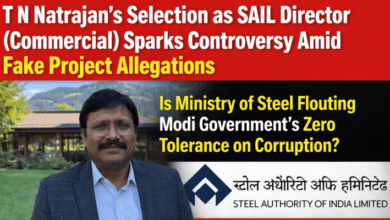
The appointment of T. N. Natarajan as Director (Commercial) has come under intense scrutiny, with serious allegations emerging from his earlier tenure as Regional Manager – Western Region (RM-WR).
Allegations of Dubious Transactions
According to sources and complaint documents, nearly 1,00,000 tonnes of steel were reportedly supplied to allegedly dubious or “fake project” entities during Natarajan’s tenure.
More concerning is the claim that around 40,000 tonnes of these supplies were executed even after a Lokpal order dated January 10, 2024, which had flagged irregularities and triggered broader investigations.
These developments raise serious questions about internal controls, due diligence, and compliance mechanisms within SAIL.
Sources further suggest that several of the recipient entities may be interconnected—linked through common promoters or trading platforms—pointing to the possibility of network-based transactions. If substantiated, this could indicate systemic gaps in verification and oversight within the PSU.
CBI Steps In, Questions Raised
In a significant development, the Central Bureau of Investigation (CBI) has reportedly issued a questionnaire to Natarajan, seeking clarification regarding his role and decisions during the period under scrutiny.
Despite these red flags, the elevation was not put on hold, surprising many observers within the sector.
Official Backing and Controversial Justification
According to sources, a senior official in the Ministry of Steel strongly supported the appointment, citing:
- Natarajan was neither suspended nor chargesheeted
- A questionnaire from an investigating agency is not sufficient grounds to deny promotion
This reasoning, sources say, ultimately tipped the scales in favour of his elevation.
Was the Selection Process Pre-Determined?
The appointment process itself has raised eyebrows.
Anil Arora, Executive Director (Marketing Services), was widely considered the frontrunner for the role, backed by:
- Over 35 years of CMO experience
- A clean service record
- Proven leadership during the post-Lokpal crisis phase in 2024
In contrast, Natarajan—seen as relatively junior—was not even called for the interview by the PESB for the post of Director (Commercial) in September 2025.
However, in an unexpected turn:
- The Public Enterprises Selection Board (PESB) rejected all six internal candidates from SAIL
- The process shifted to the Search-cum-Selection Committee (SCSC)
- The final decision rested with a senior authority, who selected Natarajan over more experienced candidates
This sequence raises a critical question:
Was due process followed—or was the outcome pre-determined?
Institutional Irony and Internal Disquiet
The situation has led to what many insiders describe as a deeply uncomfortable institutional irony.
Natarajan now heads SAIL’s marketing vertical, while several senior officers—who were bypassed—are effectively reporting to their former junior.
For many observers, this reflects not just a departure from seniority norms, but a broader concern about fairness, morale, and institutional integrity.
Silence, Evasion, and Transparency Concerns
Adding to the opacity, multiple emails sent by www.indianpsu.com to Steel Secretary Sandeep Poundrik seeking clarification on the selection process have reportedly gone unanswered.
In a further troubling development, when queries were raised:
- Instead of responding with transparency expected from a Maharatna PSU
- Director (Commercial) T. N. Natarajan allegedly blocked our phone numbers as we were seeking clarification
Such actions raise serious concerns about accountability and engagement with the media.
The Larger Question
At the heart of the issue lies a fundamental concern:
Should individuals facing investigative scrutiny be elevated to top leadership roles in strategic public sector enterprises?
For an organisation entrusted with public resources and public trust, the expectation is not just procedural compliance—but unquestionable integrity and transparency.
Conclusion
At a time when Steel Authority of India Limited stands at a crucial crossroads of transformation, the timing could not be more significant. The selection interview for the post of Chairman is scheduled for March 28, to be followed by the appointment of an Interim Chairman until the final recommendation of the Public Enterprises Selection Board receives clearance from the Appointments Committee of the Cabinet.
Yet, beneath this critical transition phase, signs of internal discontent are hard to ignore. The morale within SAIL appears far from stable—particularly among senior executives. Those at the Executive Director level, many of whom feel sidelined and bypassed in recent developments involving T. N. Natarajan, are unlikely to view the current situation with confidence. This growing unease raises serious questions about leadership cohesion at a time when the organization can least afford internal discord.
As scrutiny deepens, stakeholders will be watching closely—not just for answers, but for signals of reform and accountability within India’s public sector ecosystem.
We Report – You Decide…