

Tejas Mk-1A Deliveries Under Critical IAF Review, HAL Incoming CMD Ravi Kota to Lead Key May Meeting
For Ravi Kota, therefore, this review carries importance far beyond a routine induction discussion
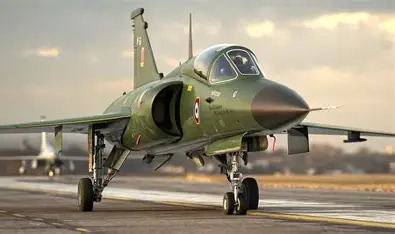
At a time when the Indian Air Force is battling a serious depletion in fighter squadron strength, the long-delayed induction of the indigenous Tejas Mk-1A has entered a decisive phase, with the Air Force scheduled to hold a high-level technical and programme review with Hindustan Aeronautics Limited in May 2026.
The meeting, expected to be held at Air Headquarters in New Delhi, assumes exceptional significance not merely because the Tejas Mk-1A programme is running over two years behind schedule, but also because it will determine whether the first batch of aircraft offered by HAL is genuinely ready for operational acceptance or still short of the Air Force’s stringent combat benchmarks.
What adds a fresh strategic dimension to this review is the impending leadership transition at HAL. Ravi Kota, the aerospace veteran widely acknowledged within India’s defence establishment as the principal force behind the operationalisation of the Light Combat Aircraft programme, will assume charge as Chairman and Managing Director of HAL from May 1, 2026 following the retirement of incumbent CMD Dr. D.K. Sunil on April 30.
Selected by the Public Enterprises Selection Board from a panel of eight candidates — six of them internal HAL nominees — Ravi Kota’s elevation is being seen as a continuity-driven but execution-focused choice by the Government, particularly at a juncture when HAL’s delivery credibility is under direct scrutiny from its largest customer, the Indian Air Force.
Known in defence manufacturing circles as the “LCA Man”, Kota currently serves as Director (Operations) at HAL and has been intimately involved in Tejas production planning, systems integration, manufacturing oversight and programme execution. As such, the upcoming review will not be a routine vendor-customer interaction; it will effectively be the first operational credibility test for the incoming HAL leadership before Air Chief Marshal A.P. Singh and the Air Force command structure.
IAF’s Message to HAL: Requirement is Urgent, But Acceptance Will Be Earned
Sources in the defence establishment indicate that despite the Air Force’s urgent requirement for fresh combat aircraft, the service has categorically ruled out any dilution in operational standards merely to accommodate HAL’s delivery commitments.
HAL has informed the Air Force that five Tejas Mk-1A aircraft are in a deliverable configuration and discussions are underway regarding their acceptance. However, Air Headquarters is understood to have maintained a firm position that physical readiness alone will not translate into induction unless the aircraft demonstrates full mission reliability across all critical combat parameters.
This stance reflects a broader institutional concern inside the IAF: the service can no longer afford platform inductions that require prolonged post-delivery rectification at squadron level, especially when frontline preparedness remains under constant strategic watch.
Three Non-Negotiable Combat Parameters Under Evaluation
Defence sources indicate that the IAF’s scrutiny will revolve around three mission-critical domains that define whether the Tejas Mk-1A can be considered a frontline combat-worthy platform.
First is weapons firing validation. The aircraft must conclusively demonstrate certified performance across its intended missile envelope, including both air-to-air and precision strike roles.
Second is radar and Electronic Warfare suite integration. For the IAF, sensor fusion, threat detection, self-protection and survivability architecture are not checklist items but battlefield essentials, particularly in a contested airspace environment.
Third is end-to-end weapons delivery and fire-control performance. This includes not only carriage and release but also software, avionics and pilot-weapon interface reliability under operational scenarios.
Officials familiar with the programme suggest that while certain peripheral or non-mission-critical refinements may continue post induction, there is virtually zero room for compromise on these three foundational warfighting capabilities.
Why Tejas Mk-1A Slipped — And Why May 2026 Matters
The Tejas Mk-1A project’s nearly two-year delay has stemmed from a combination of external supply-chain disruptions and internal systems integration complexity.
Delayed delivery of GE F404 engines from the United States adversely impacted HAL’s production sequencing. Simultaneously, integration timelines involving advanced avionics, AESA radar architecture and electronic warfare systems proved more demanding than initially projected. The cumulative effect has been repeated slippages in HAL’s promised handover dates to the Air Force.
For the IAF, however, May 2026 is not merely another programme review. It is the point at which Tejas Mk-1A must transition from a manufacturing assurance narrative to an operational confidence narrative.
HAL is under contract to supply 83 Tejas Mk-1A fighters, a fleet central to India’s effort to arrest the decline in squadron numbers and gradually reduce import dependence in the fighter segment. Any further delay in establishing acceptance confidence on the first five aircraft will inevitably cast a shadow on the broader production and induction roadmap.
Ravi Kota’s First Major Test as HAL Chief
For Ravi Kota, therefore, this review carries importance far beyond a routine induction discussion. As the architect associated with the Tejas production ecosystem and now the designated head of HAL, he will be expected not only to defend HAL’s preparedness claims but also to convince the Air Force that the company can move from delayed prototype confidence to disciplined series-delivery assurance.
In many ways, the May interaction will serve as the first definitive indicator of whether HAL under Ravi Kota can restore programme momentum, customer confidence and institutional trust in India’s most visible indigenous fighter production line.