
Winter Olympics 2026 Through the Lens of the Climate Crisis
This dramatic warming has severely reduced natural snow reliability
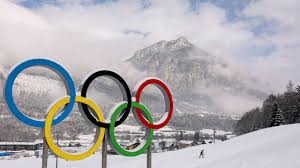
As the 2026 Winter Olympics in Milano–Cortina officially kick off, the Games offer a stark lens through which to view the accelerating climate crisis. From warming winters and vanishing snow to the troubling role of fossil fuel sponsorship, the event exposes deep contradictions between the celebration of winter sports and the forces threatening their very survival.
Warming Winters, Disappearing Snow
Climate change is already reshaping the conditions under which the Winter Olympics are held. Since Cortina d’Ampezzo last hosted the Games in 1956, average February temperatures have risen by 3.6°C, resulting in 41 fewer freezing days each year. This dramatic warming has severely reduced natural snow reliability.
Analysis by Climate Central shows that many past and potential Olympic host cities are experiencing similar trends. Under current warming trajectories, only about half of today’s Winter Olympic host locations are expected to remain climatically viable by the 2050s. As a result, large-scale artificial snowmaking is becoming increasingly central to staging the Games — raising concerns about water use, energy demand, and ecological damage.
The Carbon Cost of the Games
According to a new report, Olympics Torched, the core activities of the Milano–Cortina Games are expected to generate approximately 930,000 tonnes of CO₂ equivalent (tCO₂e). Spectator travel alone accounts for around 410,000 tCO₂e.
However, when emissions “induced” by major high-carbon sponsors are included — notably Italian fossil fuel giant Eni, carmaker Stellantis, and ITA Airways — the total carbon footprint increases by an additional 1.3 million tCO₂e, roughly 40 per cent higher than official estimates.
These emissions are projected to contribute to the loss of millions of tonnes of glacier ice and several square kilometres of snow cover in the coming decades — undermining the very foundation of winter sports.
Fossil Fuel Sponsorship Under Fire
Public scrutiny is intensifying over the Olympic Games’ commercial partnerships. Recent polling across winter-sports nations shows that nearly 80 per cent of respondents support ending fossil fuel advertising and sponsorship in winter sports, reflecting widespread discomfort among fans and athletes alike.
Greenpeace has launched a high-profile campaign challenging the sponsorship of the Milano–Cortina Games by Eni, calling it a glaring contradiction. According to Greenpeace Italy, it is impossible to protect winter sports while promoting a corporation whose core business accelerates climate breakdown.
“One year of Eni’s emissions could melt enough glacier ice to fill 2.5 million Olympic swimming pools,” Greenpeace Italy has stated, highlighting the company’s outsized role in the crisis threatening the future of the Games.
Federico Spadini, climate campaigner at Greenpeace Italy, said:
“Fossil-fuel-driven climate change is putting the Winter Olympics and Paralympics at risk, and the International Olympic Committee (IOC) cannot ignore this. Olympic values of respect for people and the environment matter. That’s why Greenpeace is calling on the IOC to drop oil and gas sponsorship from the Winter Olympic and Paralympic Games and commit to ending fossil fuel sponsorship across all Olympic Games.”
Greenpeace is urging the IOC to follow historical precedent — such as the ban on tobacco advertising in sports — and remove fossil fuel sponsorships entirely.
Winter Sports on the Frontline of Climate Change
Scientific research underscores the urgency. A study by Daniel Scott (University of Waterloo, Canada) and Robert Steiger (University of Innsbruck, Austria) finds that winters in the Northern Hemisphere — where the Olympic Winter Games and Paralympics are held — have shortened significantly over the past 50 years. Projections point to even shorter winters, reduced snowpack, and increased uncertainty for mountain regions as warming accelerates.
The impacts are already visible. Due to insufficient snow during the 2022–2023 season, seven of the first eight International Ski and Snowboard Federation (FIS) World Cup events were cancelled. This was followed by 26 cancellations across five disciplines in the 2023–2024 season.
At the Sochi Winter Games, higher crash and injury rates among athletes were partly attributed to warmer temperatures and poorer snow quality, further highlighting the safety risks associated with climate-altered conditions.
Urs Lehmann, CEO of the International Ski and Snowboard Federation, has warned:
“It turns out that the realm of snow sports is among the first to experience this devastating impact [of climate change] directly.”
Similarly, Stefan Uhlenbrook, Director of Hydrology at the World Meteorological Organization, noted:
“Climate data show a reduced number of days with snow cover, particularly at lower altitudes, making winter snow sport in these regions increasingly uncertain.”
A Defining Moment for the Olympics
The Milano–Cortina Winter Olympics arrive at a defining moment. As climate impacts on winter sports become impossible to ignore, the Games face a choice: continue business as usual, or realign with the environmental values they publicly espouse.
The future of the Winter Olympics — and winter sports themselves — may depend on how seriously that choice is taken.
The writer of this article is Dr. Seema Javed, an environmentalist & a communications professional in the field of climate and energy