

100 Days of Hormuz Closure: How the Iran War Triggered a Global Economic Shockwave
Oil at $138, Food Inflation Surges, Asia Faces Maximum Impact as Energy Crisis Deepens
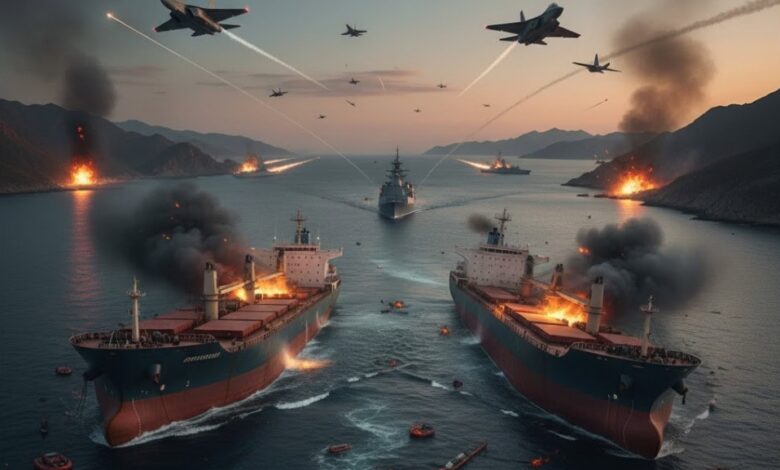
One hundred days after the outbreak of the U.S.-Israel war against Iran and the subsequent closure of the strategically vital Strait of Hormuz, the world economy continues to grapple with one of the most severe energy disruptions in modern history.
A new factsheet released by international research group Zero Carbon Analytics paints a stark picture of the economic fallout, revealing how the conflict has triggered a chain reaction across global energy markets, transportation, agriculture, food supplies and inflation.
The closure of the Strait of Hormuz—through which nearly one-fifth of global oil and a significant portion of liquefied natural gas (LNG) supplies pass—has pushed Brent crude prices to as high as USD 138 per barrel, while natural gas prices in Asia and Europe have nearly doubled.
The International Energy Agency (IEA) has described the disruption as the “largest supply disruption in the history of the global oil market.”
Asia Bears the Brunt
According to the report, Asia has emerged as the region most vulnerable to the crisis due to its heavy dependence on energy imports routed through the Strait of Hormuz.
More than half of Asia’s LNG and seaborne crude oil imports transit through the strategic waterway. As a result, countries across the region have experienced rising fuel costs, higher electricity tariffs, inflationary pressures and growing fiscal burdens due to increased energy subsidies.
The benchmark LNG price for Northeast Asia, known as the Japan-Korea Marker (JKM), surged to USD 22.35 per MMBtu on March 19, representing a staggering 108.4% increase from pre-war levels.
Meanwhile, Europe’s benchmark Dutch TTF gas prices climbed by 99.1%, reaching USD 15.81 per MMBtu.
In contrast, the U.S. benchmark Henry Hub natural gas prices remained relatively stable, highlighting the disproportionate impact on import-dependent economies in Asia.
Inflation, Food Prices and Economic Growth Under Pressure
The consequences of the conflict now extend well beyond energy markets.
Higher oil and gas prices have translated into increased transportation costs, elevated fertilizer prices and rising food inflation across multiple economies.
Global food prices have climbed to their highest levels in nearly three years, while fertilizer shortages are threatening agricultural production in several Northern Hemisphere countries.
The economic impact is becoming increasingly visible:
- The International Monetary Fund has reduced its 2026 global growth forecast by 0.22%.
- The Organisation for Economic Co-operation and Development expects global GDP growth to slow from 3.4% in 2025 to 2.8% in 2026.
- Asian economies including India, South Korea and Thailand are among those considered highly exposed to the ongoing disruption.
Clean Energy Emerges as Strategic Response
While the crisis has highlighted vulnerabilities associated with fossil fuel dependence, it has also accelerated investments in renewable energy and electrification.
According to the Global Energy Crisis Policy Monitor, 25 countries and the European Union have introduced new clean energy measures since the outbreak of the war.
Asia has emerged as the most proactive region, with 14 countries announcing renewable energy, grid expansion, electrification and energy security initiatives.
Amy Kong, Energy Transition Researcher at Zero Carbon Analytics, said the crisis demonstrates how energy insecurity quickly transforms into economic insecurity.
She noted that many governments are now strengthening renewable energy deployment to reduce exposure to volatile fossil fuel imports and improve long-term economic resilience.
Record Investments in Clean Technologies
The report highlights a significant rise in investments in solar power, batteries and electric vehicles across Asia.
Countries including Japan and the Philippines have recorded fresh highs in clean technology imports, with Chinese-made solar photovoltaic modules, batteries and EVs playing a major role in the expansion.
Industry experts believe the crisis has fundamentally changed policy thinking across Asia, turning clean energy from a climate objective into a national economic security priority.
Vietnam Illustrates the New Reality
Energy analysts point to Vietnam as an example of how energy security is becoming central to economic competitiveness.
According to Ember, volatile fuel prices and uncertainty in energy supplies are increasing costs for businesses and slowing industrial growth at a time when manufacturing-driven economies are competing aggressively for global investment.
Experts argue that reliable and affordable renewable energy is increasingly becoming a critical factor in attracting foreign investment, maintaining export competitiveness and sustaining long-term industrial growth.
A Defining Energy Security Moment
One hundred days into the conflict, the closure of the Strait of Hormuz has evolved from a regional geopolitical crisis into a global economic challenge.
The crisis has exposed the risks associated with heavy dependence on imported fossil fuels while simultaneously accelerating the transition toward renewable energy and electrification.
As governments worldwide seek to shield their economies from future supply shocks, the lessons emerging from the Hormuz disruption are likely to influence energy policy, investment decisions and economic planning for years to come.
The writer of this article is Dr. Seema Javed, an environmentalist & a communications professional in the field of climate and energy