

India’s High Exposure to Hormuz Risks
For India, the impact is particularly significant due to heavy import dependence
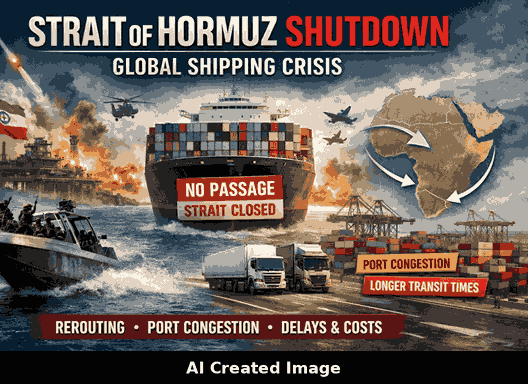
According to the Petroleum Planning & Analysis Cell (PPAC), India imports over 90% of its crude oil requirements, with imports reaching 90.2% of consumption. Domestic production has steadily declined, a trend also highlighted in reports by the Ministry of Power.
Approximately 2.5–2.7 million barrels per day of India’s crude imports — largely sourced from Kuwait, Saudi Arabia, Iraq and the UAE — pass through the Hormuz corridor.
Major Asian economies including China, Japan and South Korea also depend heavily on this route, amplifying regional vulnerability.
Likely Impact on Oil Prices and Economy
The impact on India is expected to be price-driven rather than supply-driven, at least initially.
Key risks include:
- Sharp rise in crude oil prices
- Increased freight and marine insurance costs
- Supply chain uncertainty
- Inflationary pressures across sectors
If Iran’s estimated 3.3 million barrels per day production faces disruption, crude prices could rise by 9–15%, potentially pushing oil from around $70 per barrel to $76–81.
Higher oil prices typically increase dollar demand, putting downward pressure on the rupee and raising imported inflation.
Implications for India’s Energy Transition
The crisis also has long-term structural implications:
- Renewable energy and e-mobility supply chains may face shipping delays.
- Critical mineral imports required for clean energy technologies could be disrupted.
- Rising fossil fuel costs may accelerate policy urgency toward domestic renewable energy.
- The situation strengthens arguments for diversification into nuclear and renewable power sources.
The conflict underscores the strategic necessity of energy self-reliance and diversified sourcing.
Impact on Trade: Rice, Tea and Agricultural Exports
Beyond energy, trade flows are also vulnerable.
- Indian exports of rice, tea, and fruits to West Asia and Africa face logistical disruptions.
- Nearly 25% of India’s basmati rice exports go to Iran, while about 20% go to Iraq, together exceeding 2 million tonnes valued above $2 billion.
- Iranian buyers had recently placed large basmati orders, pushing domestic prices up by nearly ₹10 per kg before tensions escalated.
- Tea exports are also at risk; shipments worth about ₹7 billion were exported to Iran in FY 2024-25.
Uncertainty surrounding shipping routes and payment mechanisms may affect exports across Central Asia and West Asia.
Strategic Takeaway
The Hormuz crisis highlights a broader geopolitical reality: global energy security remains deeply tied to narrow maritime chokepoints. For India, the episode reinforces three urgent priorities:
- Diversification of crude sourcing beyond conflict-prone regions
- Acceleration of renewable and nuclear energy adoption
- Strengthening domestic production and strategic reserves
In essence, any prolonged disruption in the Strait of Hormuz is not merely an oil market issue — it is a macroeconomic, trade, and energy security challenge with far-reaching consequences for India and the global economy.
The writer of this article is Dr. Seema Javed, an environmentalist & a communications professional in the field of climate and energy