
India–Africa Strategic Partnership Meet at Bharat Electricity Summit 2026
The India–Africa Strategic Partnership is positioned as a co-creation model, not merely a diplomatic engagement
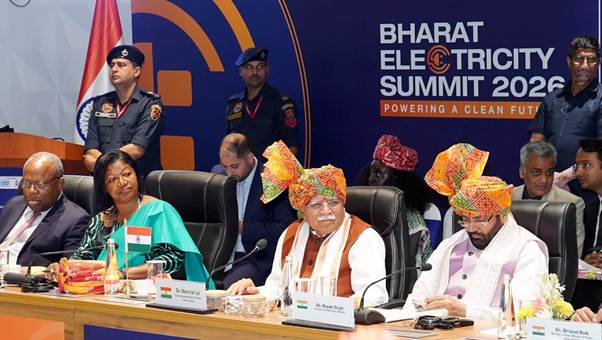
An India–Africa Strategic Partnership Meet was convened on the third day of the Bharat Electricity Summit 2026 in New Delhi, bringing together top policymakers, global investors, and energy leaders to shape a future-ready energy collaboration between the two regions.
The meeting was chaired by Manohar Lal, Union Minister for Power, and witnessed participation from a high-level delegation including:
- Shripad Naik
- Nayab Singh Saini
- Jean Mathanga
- Alain Ebobissé, CEO of Africa50
- Ministers, diplomats, and representatives from the African Union, power utilities, financial institutions, and industry stakeholders
Key Focus Areas of Cooperation
The discussions outlined a clear, action-oriented roadmap for deepening India–Africa energy ties. The partnership will focus on:
- Renewable Energy Expansion (solar, wind, hybrid systems)
- Grid Modernization & Interconnectivity
- Energy Storage & Flexibility Solutions
- Institutional Capacity Building & Skill Development
Both sides emphasized leveraging India’s technical expertise and Africa’s vast resource potential to ensure reliable, affordable, and sustainable energy access.
Vision: From Transactional to Transformational Partnership
Union Minister Manohar Lal highlighted that energy is central to economic growth, dignity, and opportunity. He reiterated India’s global vision of One Sun One World One Grid, positioning it as a transformative pathway for interconnected global energy systems.
He stressed that India’s journey from energy deficit to surplus offers scalable models for Africa. A notable example cited was collaboration between Africa50 and Power Grid Corporation of India Limited, including transmission projects in Kenya—demonstrating the strength of public-private partnerships and innovative financing.
Strong Political and Investment Backing
- Shripad Naik emphasized that the partnership must now move “from intent to action,” framing energy access as a driver of economic transformation.
- Nayab Singh Saini underlined values of “partnership, not dominance; cooperation, not competition,” highlighting Haryana’s model in energy management and governance.
- Alain Ebobissé provided a global investor perspective, stating: “Africa is not seeking aid, but investment for impact and returns,”
with growing focus on bankable projects and private capital mobilisation. - Jean Mathanga called for scaling solar, wind, smart grids, and rural electrification, aligning with Africa’s inclusive energy transition goals.
Strategic Pillars of India–Africa Energy Collaboration
The partnership is structured around long-term, scalable cooperation:
- Investment-led collaboration & technology transfer
- Public-private partnerships (PPP models)
- Expansion of transmission infrastructure & smart grids
- Decentralized solutions: mini-grids, rooftop solar, hybrid systems
- Human resource development & policy frameworks
Key global initiatives like the International Solar Alliance continue to serve as important platforms for collaboration.
A Shared Future: Inclusive, Equitable, and Sustainable
The India–Africa Strategic Partnership is positioned as a co-creation model, not merely a diplomatic engagement. With both regions representing nearly one-third of the global population, the collaboration aims to:
- Bridge energy access gaps
- Strengthen regional integration
- Enable sustainable industrial growth
- Drive long-term socio-economic transformation
The meet concluded with a strong consensus: India and Africa are set to build a future-ready energy ecosystem rooted in trust, innovation, and shared prosperity.