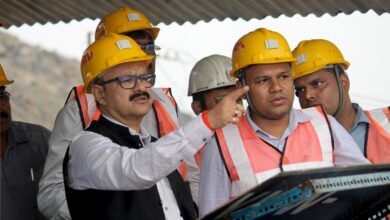

SAIL Workforce Cut Row: Workers Question “One Arrogant Bureaucrat” Behind Aggressive Manpower Reduction!
If this is government policy, why is SAIL the only PSU witnessing such drastic manpower cuts?
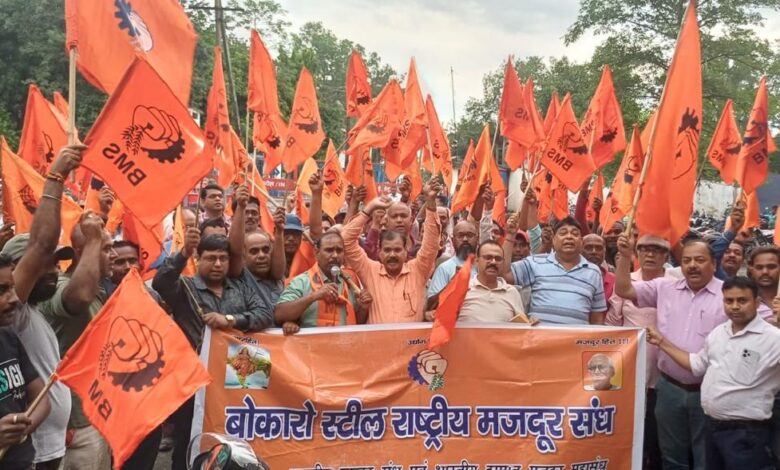
The growing unrest inside Steel Authority of India Limited is no longer just about workforce reduction. It is rapidly turning into a larger debate on public sector governance, bureaucratic overreach, and the future direction of India’s Maharatna PSUs.
Trade union leaders and workers are now openly asking: Who is driving this aggressive manpower reduction agenda within SAIL? Is this merely an internal administrative exercise, or an attempt by one bureaucrat in Steel Ministry, to project himself before the Central Government as “efficient reformers” by showcasing massive cost-cutting and savings?
“One bureaucrat seems determined to prove he is more loyal than the king himself — wielding the axe on workers not for reform, but for bureaucratic applause and brownie points.”, said a senior official on terms of anonymity.
Employees argue that if workforce rationalisation on such a drastic scale is indeed an official policy of the Government of India, then why is a similar model not being uniformly implemented across other major PSUs. Several public sector companies continue recruitment drives, maintain operational staffing levels, and consult unions before taking sensitive labour decisions. In contrast, workers allege that SAIL management has moved ahead in a unilateral and high-handed manner without adequate dialogue.
Union representatives claim the issue goes beyond economics. They say steel plants are highly sensitive industrial operations where manpower is directly linked to safety, maintenance, production stability, and emergency response systems. Any steep reduction in workforce, they warn, could eventually affect operational efficiency and industrial safety standards.
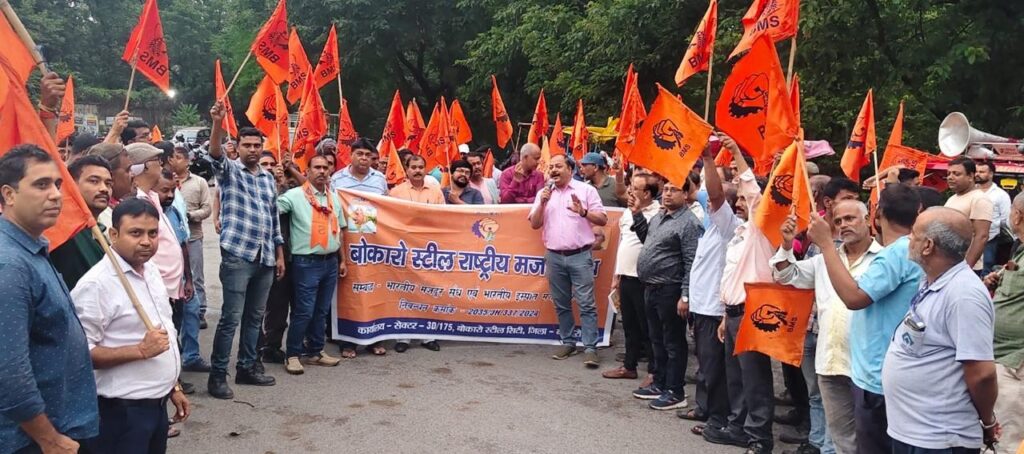
The anger among employees also reflects a deeper concern emerging across India’s public sector ecosystem — whether powerful bureaucrats heading strategic PSUs are increasingly functioning without sufficient accountability or stakeholder consultation. Workers are questioning whether individual officials can impose sweeping structural changes simply to create an image of financial discipline and administrative toughness.
Many employees privately fear that the “cost-cutting success” narrative may eventually be used to seek appreciation from higher authorities, even if it comes at the cost of worker morale, industrial relations, and long-term institutional stability.
At the centre of the debate lies a fundamental question: Can one official become bigger than the system itself?
Trade unions insist that PSUs are national institutions built over decades through public investment, technical expertise, and labour contribution. Decisions affecting thousands of workers, they argue, cannot be reduced to balance-sheet optics or bureaucratic scorecards.
With protests now spreading across multiple steel plants, pressure is mounting on the Ministry of Steel and the Central Government to clarify whether SAIL’s workforce reduction drive has official policy backing or is being pushed internally by a section of the management.
The coming weeks may determine whether the issue remains an industrial relations dispute — or evolves into a national debate on the direction and governance culture of India’s public sector enterprises.
Editor's Note: It is high time that the Central Government looks into "one-man made problems" within SAIL. Is one bureaucrat above the government? The answer is a BIG NO!