
From NTPC to Power Grid, AI Could Rewrite the Fortune of India’s Power Majors
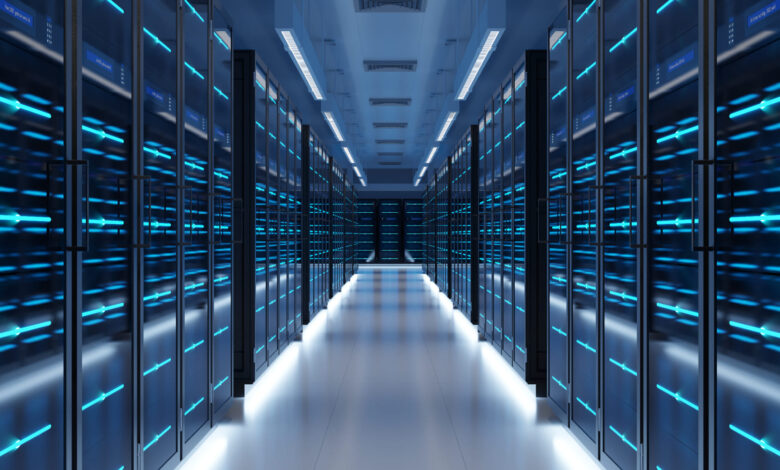
A single hyperscale AI-ready data centre can consume power comparable to a mid-sized industrial township
The global Artificial Intelligence revolution is no longer just a technology story. It is rapidly becoming an energy story — and for India’s power sector, it may well turn into one of the biggest structural growth opportunities of the decade.
As AI adoption accelerates across industries, the demand for hyperscale data centres, cloud infrastructure, machine learning computation and high-performance servers is rising at an unprecedented pace. What often gets overlooked is a simple but powerful fact: AI consumes electricity at a scale far beyond conventional digital infrastructure.
AI servers require significantly higher power than normal enterprise servers because they rely on GPU-heavy computing, round-the-clock cooling systems, uninterrupted processing, and massive storage operations. This means every expansion in AI capability directly translates into a steep rise in electricity consumption.
Recognising this shift, the Government of India has already factored AI-led data centre expansion into long-term power planning. Official estimates indicate that electricity demand from data centres alone could rise to 13.56 GW by 2031-32, while India’s total data centre capacity has already jumped from around 375 MW in 2020 to nearly 1,500 MW in 2025.
That is why market experts now believe the AI boom could trigger a new multi-year rerating in select power and infrastructure companies.
Why AI Is Becoming a Massive Tailwind for the Power Sector
Until recently, the power sector’s growth narrative was tied largely to industrial consumption, urbanisation, and electric vehicles. But AI changes the equation dramatically.
Unlike traditional industries, data centres are:
- 24×7 electricity-intensive operations,
- highly sensitive to even a few seconds of outage,
- dependent on advanced cooling and backup systems,
- increasingly looking for green and carbon-neutral energy sourcing.
A single hyperscale AI-ready data centre can consume power comparable to a mid-sized industrial township. Studies globally suggest that AI computing infrastructure is becoming one of the fastest-growing sources of incremental electricity demand worldwide.
India is now witnessing the early stages of this transition.
From Google and Microsoft to Reliance Industries, Adani Group and Tata Group, billions of dollars are being committed toward AI-ready digital infrastructure in India. Reuters recently reported that Indian conglomerates alone are planning over $200 billion worth of AI-data centre linked investments over the coming decade.
And wherever data centres go, power companies follow.
7 Power and Infrastructure Companies Best Positioned to Gain from the AI Boom
1. NTPC Limited
India’s largest power producer is perhaps the most obvious beneficiary.
AI data centres need uninterrupted baseload electricity, and NTPC’s massive thermal, renewable and upcoming nuclear portfolio gives it the ability to provide long-duration dependable power at scale. Its strong PSU balance sheet and strategic partnerships in grid expansion further strengthen its AI relevance.
As power demand visibility improves over the next decade, NTPC could emerge as the backbone supplier for industrial-scale AI campuses.
2. Power Grid Corporation of India Limited
Generating electricity is only half the story — transmitting it reliably to concentrated digital hubs is equally crucial.
AI data centres typically require transmission-level connectivity because their load density is far higher than normal commercial consumers. The Ministry of Power has already indicated that national transmission systems are being expanded to support this future demand.
That puts Power Grid in a sweet spot.
Every new hyperscale digital cluster means:
- new substations,
- dedicated evacuation lines,
- redundancy systems,
- smart load balancing.
Power Grid’s annuity-like business model makes this a long-duration compounding opportunity.
3. Adani Green Energy Limited
The next generation of AI data centres is not merely power-hungry — it is also sustainability-hungry.
Global tech giants are increasingly demanding renewable-powered campuses to meet ESG mandates and carbon neutrality commitments. Adani Green, with one of India’s largest solar-wind portfolios, is positioned to become a preferred renewable supplier.
The wider Adani Group has already announced a $100 billion AI-ready, renewable-backed data centre plan, showing how tightly energy and computing infrastructure are now converging.
4. Tata Power Company Limited
Tata Power offers perhaps the most diversified AI-linked exposure among listed utilities.
It operates across:
- generation,
- transmission,
- distribution,
- renewable energy,
- smart grid technology,
- energy management systems.
As AI infrastructure expands, Tata Power can benefit not just as a bulk supplier but also through intelligent distribution, embedded renewable sourcing, and captive industrial energy solutions.
Its growing use of AI/ML in power management also shows operational readiness for this next wave.
5. NHPC Limited
Hydropower is emerging as an underrated but strategic clean baseload source.
Unlike solar and wind, hydro offers stable generation with flexible peaking support — a critical requirement when data centre loads fluctuate sharply. As India moves toward low-carbon AI infrastructure, NHPC’s clean but dependable generation portfolio may become increasingly valuable.
6. ABB India Limited
While utilities will sell the electrons, companies like ABB India will build the nervous system.
AI-driven data centres need:
- advanced switchgear,
- energy automation,
- power quality control,
- UPS integration,
- digital monitoring,
- cooling-linked electrical management.
ABB India sits directly in this high-value engineering layer where margins can often be superior to pure power generation.
7. Larsen & Toubro Limited
Every AI data centre begins as a mega construction and systems integration project.
From electrical EPC and industrial cooling to mission-critical buildings and digital backbone deployment, L&T is positioned at the infrastructure creation end of the value chain.
The company has also announced collaborations in AI factory infrastructure, making it one of the strongest indirect plays on India’s compute expansion.
Why This Is More Than a Short-Term Market Theme
This is not merely about a cyclical jump in electricity demand.
This is the beginning of a structural convergence between:
AI + Data Centres + Renewable Energy + Grid Expansion + Industrial EPC
That means beneficiaries will not be limited to one sub-segment. Instead, the entire electricity ecosystem — generation, transmission, clean power, equipment automation, and infrastructure construction — stands to gain.
Analysts increasingly argue that investors making the mistake of viewing AI purely as a software or semiconductor story are missing the much larger “behind-the-screen” infrastructure opportunity.
Because without power, there is no AI.