
Fuel Price Hike: OMC Losses Force Course Correction, Consumers Bear the Cost
Industry insiders indicate that OMCs had little choice but to pass on part of the burden to consumers after prolonged suppression of retail prices
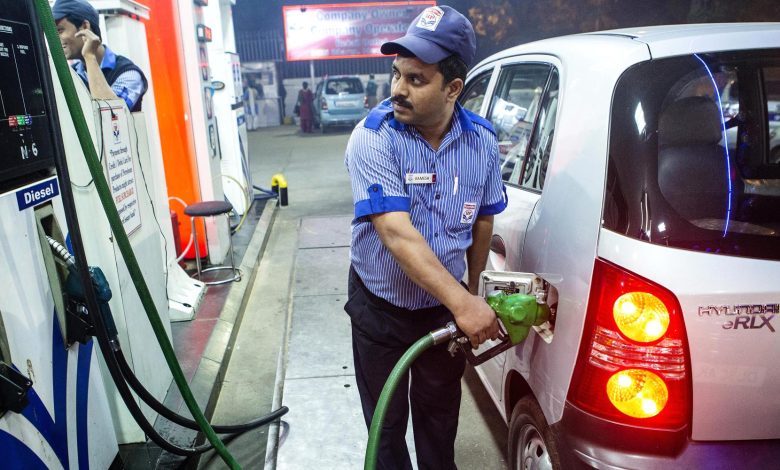
In a move reflecting deeper stress within India’s energy ecosystem, oil marketing companies have increased petrol and diesel prices across major metro cities, with hikes of up to ₹3 per litre coming into effect from Friday.
In the national capital, petrol now costs ₹97.77 per litre, up from ₹94.77, while diesel is priced at ₹90.67 per litre. Kolkata has seen a sharper increase, with petrol rising by ₹3.29 to ₹108.74 per litre and diesel climbing by ₹3.11 to ₹95.13 per litre.
Behind the Hike: PSU Oil Companies Under Financial Strain
The latest revision is not merely a routine adjustment—it signals mounting financial pressure on government-owned oil marketing companies such as Indian Oil Corporation, Bharat Petroleum Corporation Limited, and Hindustan Petroleum Corporation Limited.
For months, these companies were effectively absorbing under-recoveries, selling fuel at prices that did not fully reflect rising global crude oil costs. This mismatch—driven by a combination of political sensitivity and inflation control measures—led to mounting stress on their balance sheets.
Industry insiders indicate that OMCs had little choice but to pass on part of the burden to consumers after prolonged suppression of retail prices.
The Economics: Under-Recoveries and Delayed Corrections
The term “bleeding” is not misplaced. OMCs were:
- Incurring losses on each litre sold during high crude price phases
- Managing cash flow pressures through internal adjustments
- Delaying price revisions to maintain market stability
The current hike represents a delayed correction, aimed at restoring financial viability rather than boosting margins.
Inflationary Ripple Effect Begins
The impact of rising fuel prices is rarely confined to fuel stations. Economists warn of a cascading effect across sectors:
- Transport and logistics costs are set to rise
- Prices of essential commodities may inch upward
- MSMEs and small traders could face margin compression
- Urban household budgets will come under renewed pressure
Fuel remains a key input cost in India’s consumption-driven economy, making such hikes particularly sensitive.
Policy Dilemma: Consumer Relief vs PSU Sustainability
The development once again brings into focus the structural dilemma facing policymakers—balancing consumer affordability with the financial health of public sector enterprises.
Experts suggest that without tax rationalisation or targeted relief mechanisms, periodic price shocks may become inevitable. At the same time, sustained under-recoveries could weaken PSU oil companies, impacting their investment capacity in refining, infrastructure, and energy transition initiatives.
Energy Transition Angle: A Complicated Shift
The price hike also adds complexity to India’s long-term transition towards cleaner fuels. While higher petrol and diesel prices can make electric vehicles more attractive, the absence of a fully developed EV ecosystem—particularly in semi-urban and rural areas—limits immediate alternatives for consumers.
Conclusion: A Warning Signal for the Economy
The latest fuel price hike is more than a routine revision—it is a signal of underlying stress in India’s energy pricing framework. As OMCs move to stabilise their finances, the burden is once again shifting to consumers, raising broader questions about pricing transparency, policy intervention, and long-term sustainability.