IEA Moves to Combat Global Oil Price Spike Amid Strait of Hormuz Crisis
Iran has warned that oil prices could soar to $200 per barrel, intensifying concerns across global energy markets
The International Energy Agency (IEA) has stepped in with unprecedented measures to stabilize global oil markets as geopolitical tensions in the Middle East trigger one of the sharpest energy shocks in decades.
With the ongoing conflict involving Iran, United States, and Israel entering its third week, oil prices have surged amid fears of supply disruptions through the critical Strait of Hormuz—a route that handles nearly one-fifth of global oil and gas trade.
Record Strategic Oil Release
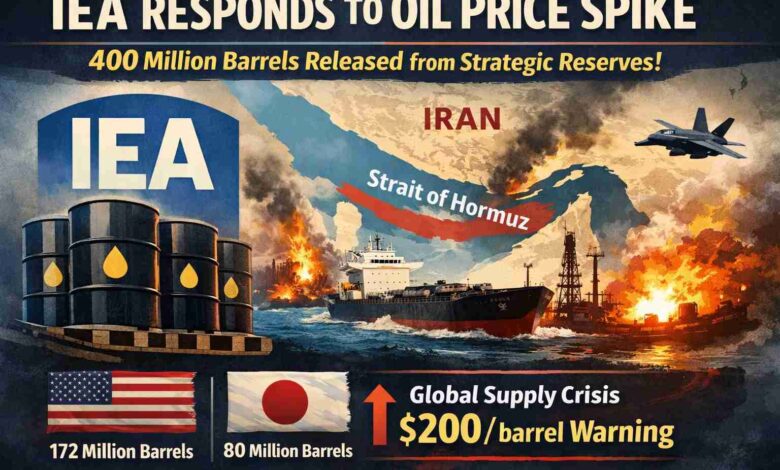
In response, the IEA has announced a record release of 400 million barrels from strategic petroleum reserves—its largest coordinated action to date.
- The United States will contribute 172 million barrels
- Japan has pledged 80 million barrels
- Other IEA member countries are expected to contribute additional volumes
IEA Executive Director Fatih Birol stated that further releases remain possible “as and if needed,” emphasizing the scale of the current crisis.
This intervention follows disruptions to tanker traffic in the Strait of Hormuz, where escalating hostilities have severely restricted maritime movement.
Market Impact and Strategic Intent
The coordinated release is aimed at:
- Stabilizing crude oil prices
- Ensuring supply continuity
- Preventing panic-driven market volatility
Initial market reactions suggest that the move has helped cool price spikes, though uncertainties remain high due to ongoing military tensions.
Iran has warned that oil prices could soar to $200 per barrel, intensifying concerns across global energy markets.
Geopolitical Escalation and Supply Risks
The conflict has effectively constrained tanker movement through the Strait of Hormuz, even though limited shipping continues under high risk.
U.S. President Donald Trump has urged oil-importing nations to take responsibility for securing the vital maritime corridor. Reports indicate Washington is engaging with multiple countries to ensure safe passage of energy shipments.
Historical Parallel: Lessons from 1973
The current crisis draws comparisons with the 1973 Oil Crisis, when an Arab oil embargo triggered global supply shocks and economic turmoil.
That crisis led to:
- Creation of strategic petroleum reserves
- Push for energy diversification
- Increased focus on energy security frameworks
Long-Term Energy Transition Imperative
While emergency stockpile releases provide short-term relief, experts stress the need for structural changes:
- Accelerating renewable energy adoption
- Expanding electric mobility
- Reducing dependence on geopolitically sensitive supply routes
The current crisis underscores the urgency of transitioning toward a more resilient and diversified global energy system.
Conclusion
The IEA’s historic intervention highlights both the severity of the current oil shock and the limits of short-term solutions. As geopolitical risks persist, the global energy landscape faces a critical inflection point—balancing immediate crisis management with long-term transformation.
The writer of this article is Dr. Seema Javed, an environmentalist & a communications professional in the field of climate and energy