

EV Boom Outpaces Readiness: Stronger Incentives Like Toll Waivers Needed to Bridge India’s Electric Mobility Gap
Ecosystem Gaps and High Costs Threaten to Slow India’s EV Momentum
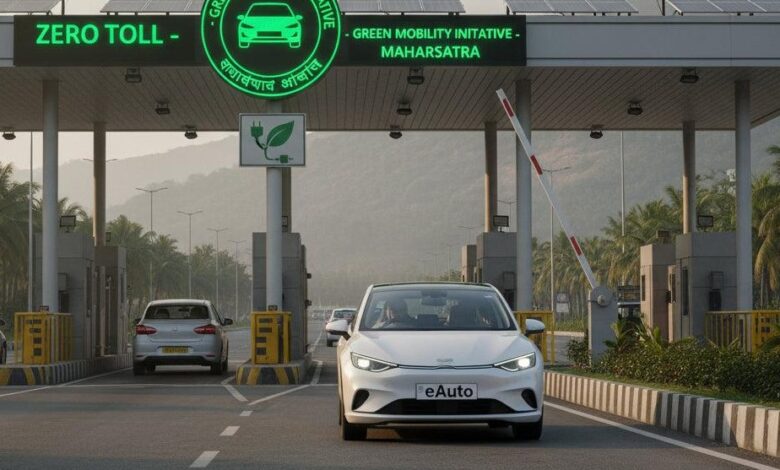
India’s electric vehicle (EV) transition is accelerating, backed by policy push, rising fuel costs, and environmental concerns. Yet, even as adoption gathers pace, a clear challenge is emerging: the country’s ecosystem is not fully equipped for a large-scale EV boom—and stronger, usage-based incentives are now critical to sustain momentum.
Charging Network Expands, But Remains Uneven
Urban centres such as Delhi, Bengaluru and Mumbai are witnessing a steady rise in EV charging stations across malls, offices, and highways.
However, the growth is highly concentrated:
- Majority of chargers are located in Tier-1 cities
- Tier-2, Tier-3 and rural regions face severe infrastructure gaps
- Highway charging networks remain inconsistent
This uneven distribution has resulted in a fragmented ecosystem, limiting EV usability beyond urban commuting.
Rural India Still Outside the EV Grid
Beyond city limits, the EV story weakens considerably.
- Public charging stations are sparse in most districts
- Power supply remains inconsistent in several regions
- Private sector investment is limited due to low demand
The result is a widening urban–rural divide, with EV adoption largely confined to metropolitan India.
Power Infrastructure Under Pressure
India’s EV ambitions depend on a reliable electricity backbone—an area still facing constraints.
- Distribution networks are not fully equipped for high EV charging loads
- Peak demand pressures could rise sharply with increased adoption
- Voltage fluctuations and outages persist in many regions
Without grid strengthening, EV expansion risks shifting stress from fuel imports to power infrastructure.
High Upfront Costs Continue to Deter Buyers
Despite subsidies, EVs remain costlier than conventional vehicles.
- Entry-level EVs are typically ₹2–4 lakh more expensive than petrol counterparts
- Affordable options remain limited
- Financing ecosystems are still evolving
For a price-sensitive market like India, cost remains a major barrier to mass adoption.
Range Anxiety and Practical Constraints Persist
Consumers continue to face real-world challenges:
- Limited charging availability on highways and in rural areas
- Longer charging times compared to refuelling
- Lack of seamless, reliable charging networks
These issues continue to restrict EV adoption to early adopters and urban users.
Import Dependence Raises Strategic Risks
India’s EV ecosystem is also exposed to global supply chains.
- Heavy reliance on imported battery materials
- Limited domestic cell manufacturing capacity
- Vulnerability to global price and supply disruptions
This dependence raises concerns over long-term sustainability and cost stability.
Policy Push Strong, But Execution Uneven
Government initiatives such as FAME-II have accelerated adoption, but gaps remain:
- Uneven implementation across states
- Lack of standardisation in charging infrastructure
- Delays in subsidy disbursement in some regions
The policy framework is robust, but execution remains inconsistent.
Need for Next-Generation Incentives
As the EV market evolves, experts believe India must shift from purchase subsidies to usage-based incentives that directly impact consumers’ daily costs.
Toll-Free Highways: A High-Impact Reform
Granting toll exemptions for EVs is emerging as a key recommendation.
Currently, EV users pay the same toll as petrol and diesel vehicles. A waiver could:
- Significantly reduce long-distance travel costs
- Improve total cost of ownership (TCO)
- Encourage adoption among private and commercial users
- Boost confidence in intercity EV travel
For frequent highway users, toll savings could become a decisive factor in choosing EVs.
Complementary Incentives to Drive Adoption
Beyond toll waivers, a broader incentive framework is needed:
- Reduced GST on EV components and batteries
- Interest subvention on EV loans
- Subsidised or free public charging in early stages
- Priority parking and urban access benefits
- Stronger incentives for fleet electrification
Such measures can make EV ownership more practical and attractive across income segments.
A Two-Speed EV Transition
India’s EV journey is currently unfolding at two different speeds:
- Urban India: Gradual but steady adoption supported by infrastructure
- Rural India: Limited adoption due to lack of ecosystem readiness
Bridging this divide is essential for a truly national EV transition.
Conclusion
India’s electric mobility push is both necessary and inevitable. However, the ecosystem is not yet aligned with the scale of ambition.
To sustain growth and enable mass adoption, the focus must now shift to:
- Expanding charging infrastructure beyond metros
- Strengthening power distribution networks
- Reducing ownership and usage costs
- Introducing impactful incentives like toll-free EV travel
Without these interventions, India’s EV revolution risks progressing unevenly—gaining speed in cities while leaving large parts of the country behind.