
Health Fear Drives Climate Action Better Than Environmental Warnings, Says Global Study
Across all four countries, over 80 percent of respondents said they are concerned about climate change, while a large majority already believe it is damaging people’s health
Warnings about melting glaciers and rising sea levels may not move people as much as one simple message — climate change is harming your health.
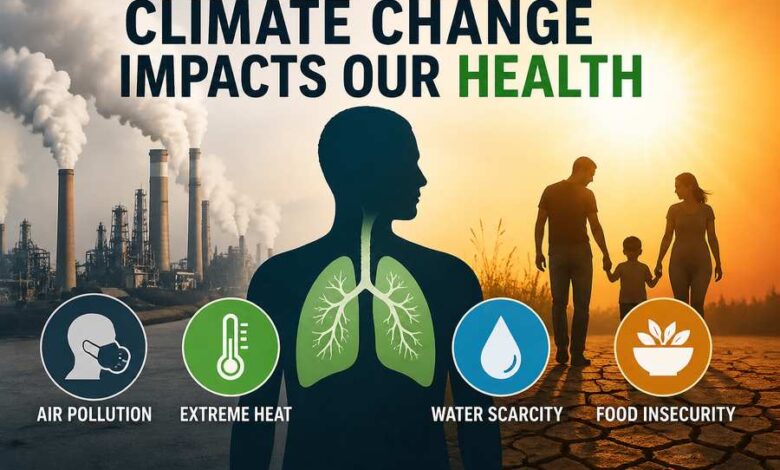
A major global study has found that people are twice as likely to support urgent government action on climate change when they are informed about its direct impact on human health, including air pollution, extreme heat, food shortages and disease risks.
The international research, conducted for Wellcome, covered Brazil, India, Japan and South Africa and concluded that health-based climate messaging is far more effective than traditional environmental warnings in changing public attitudes. (wellcome.org)
Across all four countries, over 80 percent of respondents said they are concerned about climate change, while a large majority already believe it is damaging people’s health.
Indians Most Concerned About Air Pollution, Heat and Healthcare
In India, the strongest public response came when climate change was linked to:
- worsening air pollution,
- rising heat-related illnesses,
- and stress on healthcare services.
The study found 66 percent of Indians want the government to do more on climate change, while 74 percent seek urgent action specifically to protect people from climate-related health threats.
The findings come as India continues to battle recurring heatwaves, toxic urban air, water shortages and increasing climate-linked health emergencies. New global studies are now focusing on India’s climate-health burden and pollution-related disease risks. (hsph.harvard.edu)
Health Risks Make Climate Change Feel Real
The study found that people respond more emotionally and politically when climate change is presented not as an environmental debate, but as a danger to:
- breathing,
- food and drinking water,
- children’s health,
- infectious diseases,
- and family medical costs.
Country-wise concerns varied:
- Brazil: mental health and food-water insecurity
- Japan: extreme heat and elderly health
- South Africa: children’s and maternal health
But the conclusion remained the same — when climate change is linked to hospitals, lungs and survival, support for action rises sharply.
Big Message for Policymakers
The report suggests governments may win stronger public backing for climate policies if they stop speaking only about carbon emissions and start talking about public health.
For countries like India, where climate change is increasingly visible in heat stress, respiratory illness and water scarcity, health may now be the most powerful language for climate action.
The writer of this article is Dr. Seema Javed, an environmentalist & a communications professional in the field of climate and energy