

Munitions India Limited Bribery Case: CBI Cites Cash Bags Delivered to PSU Official’s Home
CBI flags alleged cash deliveries, WhatsApp communications and multiple transactions between senior MIL executive Anil Kumar and SMPP chief
Read in your preferred Language :
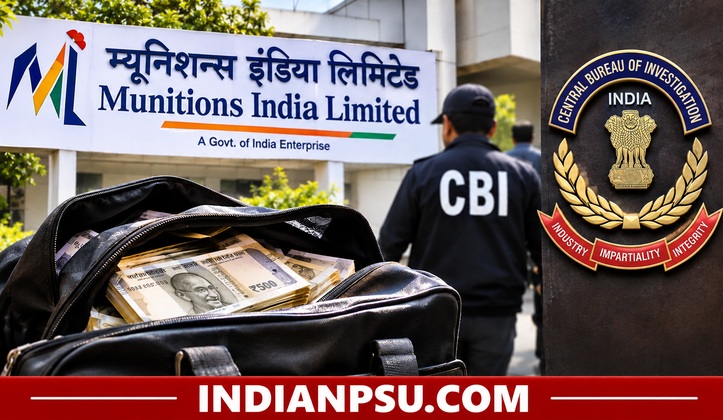
Munitions India Limited (MIL), a key defence public sector undertaking, has come under the spotlight in a major bribery investigation after the Central Bureau of Investigation (CBI) cited alleged cash deliveries to a senior PSU executive’s residence, WhatsApp communications and multiple financial transactions while opposing the bail plea of SMPP Limited CEO Ashish Kansal.
A special CBI court in Pune rejected Kansal’s bail application, taking note of the investigating agency’s submissions that the possibility of multiple transactions between him and co-accused Anil Kumar, a senior executive director of Munitions India Limited, could not be ruled out.
The court observed that the allegations warranted further investigation.
Cash bags allegedly delivered to PSU executive’s residence
In its submissions opposing bail, the CBI referred to an alleged cash delivery incident dated August 25, 2026.
According to a witness statement cited by the agency, Anil Kumar had instructed a witness to collect packets from Hotel Conrad in Pune.
The witness subsequently allegedly received a WhatsApp call from a number saved under the name Ashish Kansal. The caller reportedly reiterated the instructions regarding collection of the packets.
The witness told investigators that he collected bags containing cash from the hotel and delivered them to Kumar’s residence.
The CBI also referred to WhatsApp communications between the accused, alleging that conversations had been deleted. Call-log screenshots reportedly established communication between Kansal and the witness involved in the alleged delivery.
Rs 1.67 crore cash delivery under investigation
The CBI investigation has also focused on an alleged cash delivery of approximately Rs 1.67 crore to Anil Kumar’s residence in October.
According to the agency’s submissions, an angadia (traditional cash courier) told investigators that he had spoken to Kansal over the phone and subsequently met him at his residence, where cash was allegedly handed over after being counted using a currency-counting machine.
The courier reportedly received a commission of Rs 67,200 for facilitating the transaction.
Another witness allegedly informed investigators that Rs 1,67,90,000 had been booked in Delhi for delivery in Pune.
The witness reportedly contacted Anil Kumar on October 12, informed him about the amount and shared his location through WhatsApp. A person subsequently arrived with a token and collected the money.
The amount was later recovered from the residential premises of the MIL executive, according to the court proceedings.
Rs 500 crore ammunition contract under scrutiny
The alleged transactions are being investigated in the context of a Rs 500 crore ammunition supply contract awarded to SMPP Limited by Munitions India Limited.
The CBI has alleged that Kansal was in regular contact with Anil Kumar in connection with the contract.
The agency is also investigating whether the PSU executive shared confidential information relating to defence production, procurement and other strategically important activities in exchange for illegal gratification.
The investigation assumes particular significance because Munitions India Limited is a major defence PSU responsible for manufacturing ammunition, explosives, propellants and other critical defence products for India’s armed forces.
The CBI has further alleged that Kumar routed or parked portions of the suspected illegal proceeds through family members, including his wife and brother.
Defence challenges CBI allegations
During the bail proceedings, Kansal’s counsel, advocate S. K. Jain, reportedly argued that his client was in regular contact with Anil Kumar because of the official ammunition supply contract awarded to SMPP.
The defence maintained that the CBI’s case against Kansal was based on suspicion and lacked incriminating evidence warranting his continued custody.
However, the court considered the witness statements, WhatsApp call records and the possibility of multiple transactions before rejecting the bail application.
The case has raised serious questions about transparency, integrity and the protection of sensitive information in India’s defence procurement ecosystem, particularly where private manufacturers interact with officials occupying strategically important positions in defence PSUs.
The investigation is continuing, and the allegations against the accused are yet to be established through trial.