
Three Workers Killed, Two Injured in Major Accident at NTPC’s North Karanpura Project in Jharkhand
The construction contract was reportedly awarded to a private company which had sub-tendered the work to another vendor
Read in your preferred Language :
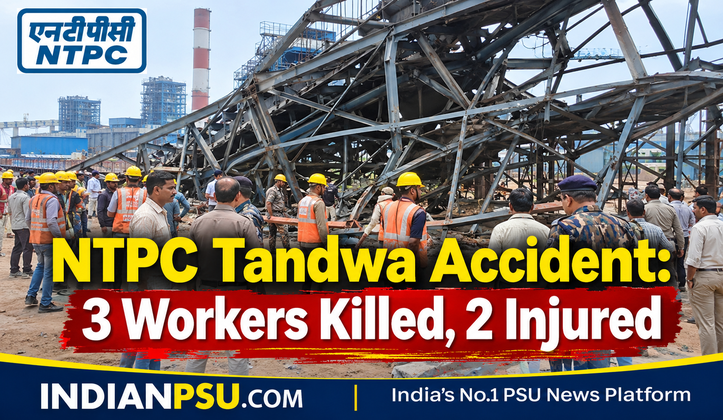
In an unfortunate accident at NTPC Limited’s under-construction North Karanpura Super Thermal Power Project in Tandwa, Chatra district, Jharkhand, claimed the lives of three contract workers and left two others injured on Wednesday, November 18.
The accident occurred at the external Coal Handling Plant (CHP), at the CHP-JH-1 location, where construction work on a coal conveyor belt was underway. Preliminary reports indicate that a section of the conveyor belt structure collapsed, trapping workers beneath the debris.
The injured were rushed to NTPC’s Sanjeevani Hospital in Tandwa for medical treatment.
According to preliminary information, the collapse involved the conveyor belt’s structural assembly, with a possible technical or structural design flaw being examined as a potential cause. However, the exact circumstances leading to the accident are yet to be established.
The construction contract was reportedly awarded to a private company which had sub-tendered the work to another vendor for execution of the work. The role of the contractors and the circumstances surrounding the structural failure are expected to come under scrutiny during the investigation.
The incident triggered panic at the construction site, with police, district administration officials and rescue teams reaching the spot. Fellow workers also expressed anger following the tragedy.
The fatal accident at NTPC’s flagship North Karanpura project has once again brought the issue of occupational safety at large infrastructure and power-sector construction sites into sharp focus.
The collapse of a major conveyor belt structure during construction raises questions about structural design validation, engineering supervision, quality control and compliance with prescribed safety standards.
The investigation will need to establish whether the structure was adequately inspected, whether construction protocols were followed and whether responsibility for the failure rests with the principal contractor, subcontractor or other agencies involved.