
Stop Pedestrian Reporting and Howling – Learn the Basics of Economics & Fuel Pricing
Global crude drives fuel prices, not studio outrage - yet such debates deserve honest space
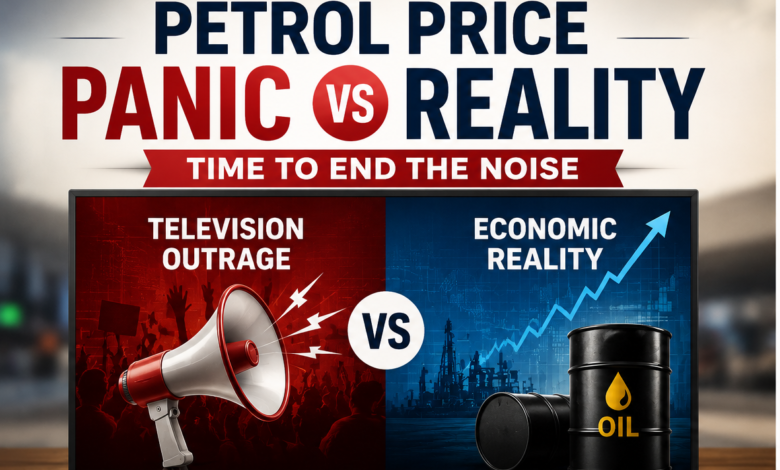
I was having my morning tea when, quite unfortunately, I switched on a television news channel. What followed was all too familiar. A news anchor, almost shouting at the top of her voice, declared: “महंगाई की डबल मार!” – linking it to the latest increase in petrol prices.
Yet, in stark contrast, the very same channel’s ground reporters were interviewing car and bike owners who appeared largely unfazed. Their response was measured, almost matter-of-fact: the hike was expected.
After all, even a semi-literate person in this country understands a basic economic reality – fuel prices in India are closely linked to international crude oil trends. When global crude rises, domestic prices inevitably follow. It is neither sudden nor surprising.
What is surprising, however, is the persistence of shrill, context-free outrage that dominates television screens, even when the facts are neither hidden nor complex.
Through the day, this cacophony continued. Many news channels seemed locked in the same loop of exaggerated alarm. But then, for a brief moment during the evening prime time, a rare voice of reason broke through the noise.
A friend and former colleague - also a serious student of economics—appeared on screen. Calm, composed, and armed with data, he explained the rationale behind the latest fuel price hike. Backed by comparative global numbers, he pointed out a reality that often gets conveniently ignored: India remains among the few countries where petrol prices, despite recent increases, have not spiralled to the levels seen in several developed economies.
It was a reminder of what television journalism could be—measured, informed, and rooted in facts. Unfortunately, such moments remain the exception rather than the norm.
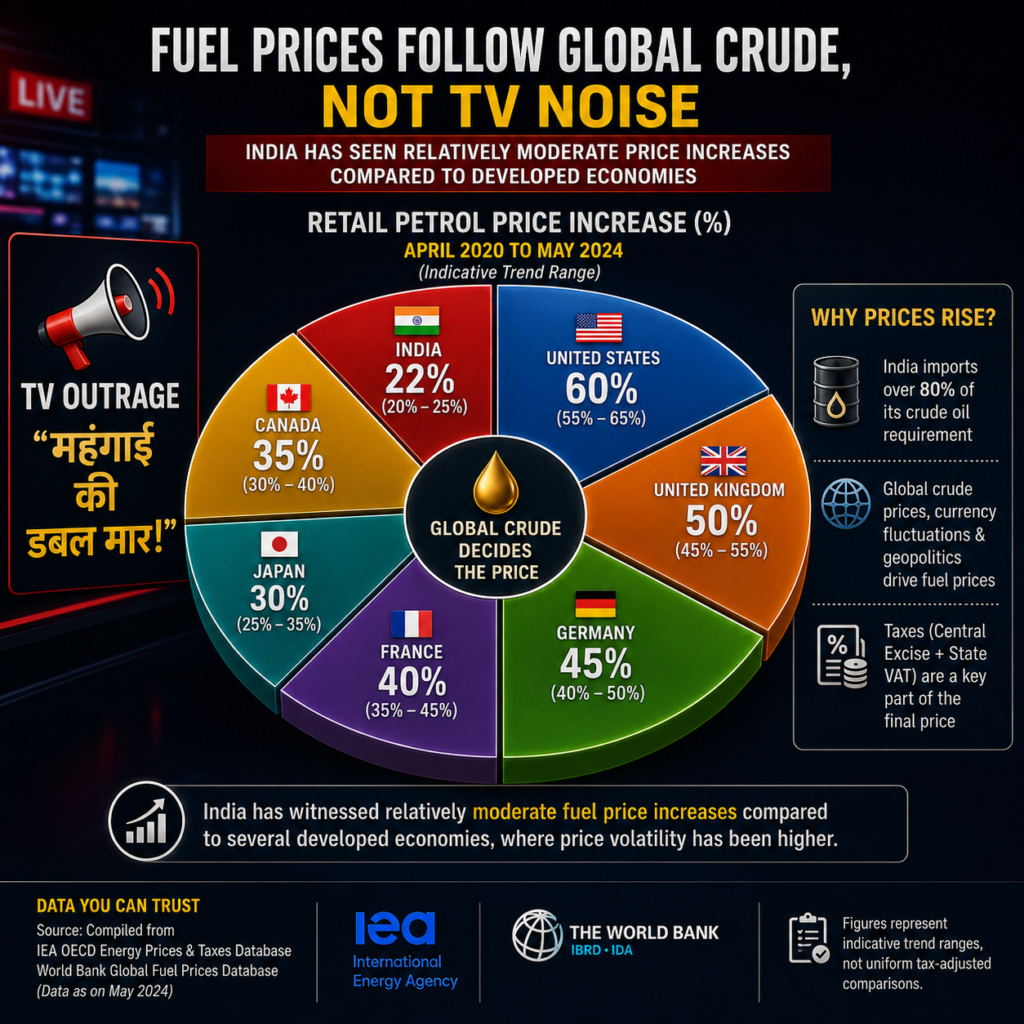
The ranges are based on publicly available retail fuel datasets and OECD/IEA trend observations
The rising chorus of noise on national television over petrol and diesel prices reflects a troubling gap between rhetoric and reality. India imports over 80% of its crude oil requirement, making domestic fuel prices highly sensitive to global market movements. Be it geopolitical tensions, supply disruptions, or decisions by major oil-producing nations – these factors shape prices far more than any studio debate ever can.
Yet, prime-time narratives persist in portraying fuel price increases as a simplistic governance failure, willfully ignoring the global context. This brand of reductionism neither fools the viewer – far more intelligent than media moguls presume – nor fosters informed debate; it merely adds to the noise.
That said, an honest debate must also acknowledge the role of taxation. Central excise duties and state-level VAT constitute a significant portion of retail fuel prices. While the government has periodically reduced excise duties to provide relief, these taxes remain a vital revenue stream – supporting infrastructure, welfare schemes, and capital expenditure essential for long-term growth.
The issue, therefore, is not merely fuel pricing – but perspective. A more responsible discourse would explain how global crude prices, currency fluctuations, and fiscal policy interact. Instead, what viewers often get is theatre masquerading as analysis.
In the final analysis, fuel prices are determined more in global oil markets than in television studios. The sooner this distinction is understood, the better served the public will be.
Crude decides the price - credibility should decide the debate.