
Ministry of Tourism and ONDC Launch National Digital Tourism Stack to Build Open Digital Infrastructure for India’s Tourism Economy
More than 1,000 tourism experiences, including 170 ASI monuments and 29 museums, are already transacting on the ONDC Network
The Ministry of Tourism, Government of India, and Open Network for Digital Commerce (ONDC) today launched the National Digital Tourism Stack (NDTS), an open digital infrastructure initiative aimed at making more of India’s tourism ecosystem discoverable, trusted and digitally accessible, while enabling tourism to generate greater economic opportunity across the country.
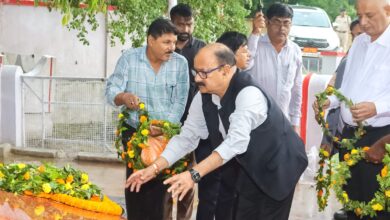
The launch took place on the occasion of World Tourism Day 2026, in the presence of Gajendra Singh Shekhawat, Union Minister of Tourism and Culture.
Tourism is a significant engine of economic activity, supporting employment and livelihoods across hospitality, transport, food, retail, handicrafts, homestays, guiding services, attractions and thousands of small businesses embedded within local communities.
According to official Ministry of Tourism data, India’s tourism sector contributed 5.22% to national GDP and supported 8.46 crore jobs in 2023-24. Yet a significant part of India’s tourism supply, particularly smaller providers, local experiences and lesser-known destinations, remains fragmented across offline and digital channels.
For travellers, this fragmentation creates friction across discovery, trust, payments and identity-related requirements, particularly when dealing with unfamiliar providers or navigating multiple services across a journey. For tourism businesses, it limits access to wider digital demand and can require separate integrations across platforms.
The National Digital Tourism Stack is being developed to address these gaps by creating open digital infrastructure that connects destinations, homestays, guides, attractions, experiences, transport services and other tourism providers with travellers through multiple digital platforms.
Unlike a standalone tourism portal or marketplace, the Stack is being designed as open digital infrastructure. For tourism providers, it will enable a “list once, reach multiple platforms” model, allowing homestays, guides, attractions and operators to publish their offerings once and become discoverable across participating applications.
This will help them reach wider digital demand without having to build their own digital presence or integrate separately with every platform. For travellers, it will connect places, experiences, stays, routes and last-mile mobility through shared digital infrastructure.
Designed as AI-first digital infrastructure, the Stack will support emerging models of travel discovery and planning, including AI-led interfaces and personal digital agents, while allowing the underlying ecosystem to evolve as technology and traveller behaviour change.
The Stack is designed around an ecosystem spanning more than 23,000 tourism experiences and homestays. More than 1,000 tourism experiences, including 170 ASI monuments and 29 museums, are already transacting on the ONDC Network, providing an existing foundation for the broader programme.
Gajendra Singh Shekhawat, Union Minister of Tourism and Culture, said tourism is increasingly about authentic experiences, including local cuisine, art, traditions and meaningful connections.
He said the next phase of India’s tourism journey must ensure that growth extends beyond popular destinations and creates opportunities for local communities, entrepreneurs, women and youth while making tourism more balanced, inclusive and sustainable.
Describing the initiative, Shekhawat said the digital tourism stack is an AI-native digital infrastructure for the tourism industry, with its impact expected to extend beyond technology to the national tourism ecosystem.
Bhuvnesh Kumar, Secretary, Ministry of Tourism and Culture, said Artificial Intelligence would be at the front end of the National Digital Tourism Stack, with a vision of “One ticket, One pass” to bring together a traveller’s journey across India.
He pointed out that flights, hotels, cabs, boat rides and other tourism services currently often require bookings through different websites and platforms, creating fragmentation for travellers.
The National Digital Tourism Stack is intended to bring these services together through common digital infrastructure and enable a more seamless and connected travel experience.
Kumar said the Ministry of Tourism would act as the catalyst and lead for the initiative and work with States and Union Territories to curate and validate tourism experiences across the country.
Karthick Prabhu, Vice President, Travel, ONDC, said tourism is fundamentally an ecosystem involving destinations, stays, experiences, mobility, local businesses, platforms and government systems.
He said the National Digital Tourism Stack creates an opportunity to connect these participants through shared and open digital infrastructure rather than developing them in silos.
As travel discovery increasingly moves towards AI-led interfaces and personal digital agents, he said the underlying infrastructure would need to remain trusted and adaptable to new forms of traveller experiences.
Trust at the Core
A core principle of the Stack will be trust. The infrastructure is envisaged to support capabilities around provider credentials, reliable tourism information, service standards, ratings and reviews, grievance mechanisms and other trust frameworks that can evolve with the needs of travellers and the wider ecosystem.
The National Digital Tourism Stack forms part of ONDC’s broader approach of building open digital rails to address structural gaps in markets and enable new use cases as they emerge.
Retail remains ONDC’s core mandate, with Logistics and Financial Services serving as key enablers for retail commerce, while Mobility, Transit and Travel extend the network into high-impact demand use cases.
In Retail, ONDC’s DigiDukaan initiative has already onboarded 18,000+ retailers across Hyderabad, Jaipur and Mumbai for B2B procurement digitisation. Initiatives such as Amazing India are also helping products from farmers, artisans and other micro-producers become e-commerce ready and reach wider markets.
Across these initiatives, ONDC provides common digital infrastructure that enables ecosystem participants to connect and transact. It does not operate as a marketplace or compete with businesses and platforms using the Network.