
NMDC Rewrites Bastar’s Story: From Former Conflict Zone to Industrial Economy
₹5,427-crore integrated project links Bailadila with Nagarnar while creating the infrastructure for greater value addition, employment and economic opportunity in Bastar
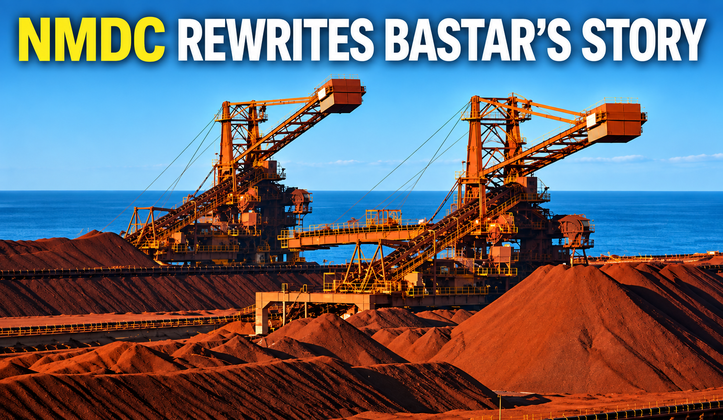
In the forested tribal heartland of southern Chhattisgarh, Bastar is beginning to acquire a new identity. For decades, the region was associated nationally with Left-Wing Extremism and the violence that disrupted economic activity and development. Today, as the security situation has improved dramatically, the focus is shifting towards the more difficult task of creating jobs, industry and sustainable economic opportunity.
That is where NMDC Ltd is becoming an important part of Bastar’s next chapter.
The country’s largest iron ore mining company has deepened its presence in the region with a ₹5,427-crore integrated project linking its Bailadila mines at Bacheli with Nagarnar. The project includes an iron ore processing facility at Bacheli, a 135-km slurry pipeline and a 2 million tonne per annum pellet plant at Nagarnar.
The significance goes beyond the numbers. NMDC is moving from simply mining iron ore in Bastar to processing it, transporting it through a dedicated pipeline and converting it into a value-added product for steelmaking.
That creates a much larger industrial ecosystem around the mineral wealth of the region.
From Bailadila to Nagarnar
Bastar is home to the famous Bailadila iron ore deposits, among India’s most important sources of high-grade iron ore. NMDC has been operating its mines in the area for decades.
The new investment changes the nature of that operation.
Iron ore fines and slimes generated at Bailadila can now be processed into concentrate. The concentrate will travel approximately 135 km through NMDC’s new slurry pipeline to Nagarnar, where the new 2 MTPA pellet plant will convert it into pellets suitable for steelmaking.
The pipeline passes through 61 villages in Bastar and Dantewada districts.
For NMDC, it means greater value addition and better utilisation of its mineral resources. For the region, it means the creation of additional industrial activity around mining—processing, engineering, maintenance, transportation, technical services and contracting.
The bigger opportunity is employment
This is particularly significant for Bastar’s young population.
The region’s transition cannot be measured only by the reduction in extremist violence. A lasting transformation requires young people to have skills, jobs and businesses that give them a stake in the region’s future.
An integrated industrial operation creates opportunities beyond the company’s direct workforce. Processing facilities require technicians and operators. Pipelines require engineering and maintenance personnel. Pellet plants require specialised manpower. Contractors, suppliers and service providers create another layer of economic activity.
The opportunity now is to ensure that Bastar’s youth are trained to fill these jobs and that local entrepreneurs become part of the emerging supply chain.
That could give a new generation an economic pathway that was far less accessible during the years when conflict dominated the region.
Bastar after Naxalism
The timing of NMDC’s investment is important.
The Centre announced in 2026 that no district in the country remained officially classified as Left-Wing Extremism affected, although 37 districts were retained under a “Legacy & Thrust” category for continued security and development interventions.
Bastar is therefore entering a fundamentally different phase.
The challenge is no longer simply to secure the region. It is to ensure that the peace dividend reaches ordinary people.
Roads, mobile connectivity, government services and security infrastructure can create the conditions for development. But industry and employment are what can give that development an economic foundation.
NMDC’s growing industrial footprint fits into that equation.
More than an iron ore project
The ₹5,427-crore project also marks a significant step in NMDC’s strategy of moving further up the iron ore value chain.
The Nagarnar pellet plant uses Straight Grate Induration technology, allowing the company to convert concentrate into pellets for steelmaking.
The chain now runs from Bailadila mining to Bacheli processing, slurry transportation and Nagarnar pelletisation.
It is a far more integrated model than simply extracting ore and transporting it out of the region.
For Bastar, that distinction matters because every additional stage of processing creates another requirement for manpower, services and supporting businesses.
The real test begins now
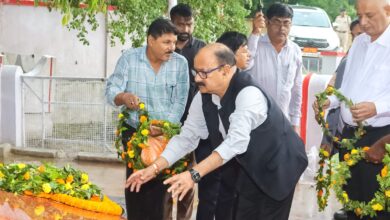
NMDC’s CMD Amitava Mukherjee, who monitored the maiden production from the company’s headquarters because adverse weather prevented the leadership team from travelling to the project site, described the commissioning as a “red-letter day” for the company.
For NMDC, it is a major industrial milestone.
For Bastar, it could become part of something much larger.
The region has immense mineral wealth, a large young population and a rapidly improving security environment. What it needs now is an economic ecosystem that connects these advantages.
NMDC can provide an important part of that ecosystem.
The company’s long-term ambition to take its iron ore production capacity to 100 million tonnes annually could further expand its industrial presence.
But the real measure of Bastar’s transformation will not be tonnes of iron ore or pellets alone. It will be whether the region’s young people can turn the new industrial environment into skills, employment, entrepreneurship and a future in the mainstream economy.
Bastar spent decades trying to escape the shadow of conflict.
Its next challenge is to build prosperity.