
MoPNG Hosts Data Driven Exploration Conference under Samudra Manthan to Boost India’s Exploration Ecosystem
India is turning uncertainty into opportunity and data into discovery to power India’s energy future and our quest towards energy Aatmanirbharta : Hardeep S Puri
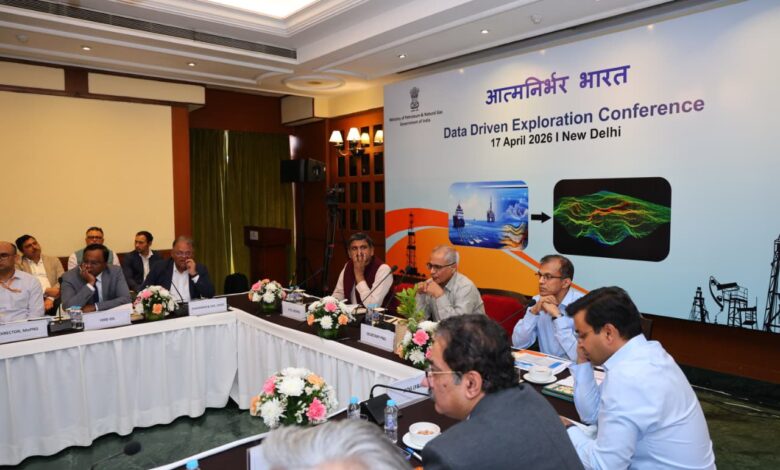
India is rapidly transforming its hydrocarbon exploration landscape by leveraging data, technology, and global collaboration, as highlighted during the “Data Driven Exploration” conference organized by the Directorate General of Hydrocarbons (DGH) under the Samudra Manthan – National Offshore Mission.
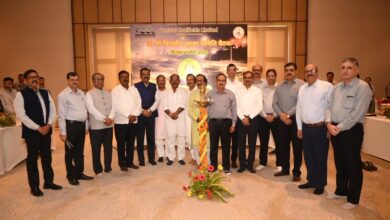
The conference brought together policymakers, global energy majors, domestic operators, and technology providers to deliberate on strengthening India’s exploration ecosystem through a robust data-driven approach.
In a message shared on X, Petroleum and Natural Gas Minister Hardeep Singh Puri emphasized that India is “turning uncertainty into opportunity and data into discovery” to drive energy security and achieve energy Aatmanirbharta. He noted that India is moving beyond traditional exploration methods and adopting a multi-client model, enabling wider participation and innovation in exploration and production (E&P).
High-Level Industry Participation
The conference was chaired by the Secretary of the Ministry of Petroleum and Natural Gas and saw participation from over 80 stakeholders, including:
- Directorate General of Hydrocarbons
- Global energy companies like BP, ExxonMobil, and Shell
- Indian players such as Reliance Industries, Cairn India, and Adani Welspun Exploration
- Seismic and technology firms including SLB and Shearwater GeoServices
Key Insights from the Conference
Data as the Core Driver of Exploration
Participants unanimously agreed that availability, quality, and accessibility of seismic data are critical determinants of exploration success. Data gaps in frontier and deepwater basins continue to limit investment and exploration intensity.
Accelerating Seismic Data Acquisition
Industry stakeholders stressed the need for targeted and faster seismic surveys, aligned with upcoming licensing rounds. Early-stage data availability significantly enhances investor participation.
Multi-Client Models to Boost Efficiency
The conference highlighted the benefits of Multi-Client Seismic Models (MCM) in improving cost efficiency and enabling broader participation. However, a calibrated approach tailored to India’s basin maturity was recommended.
Unlocking Value from Legacy Data
Reprocessing and reinterpretation of existing datasets using advanced imaging technologies and AI tools were identified as low-hanging opportunities to unlock immediate exploration value.
Government’s Enabling Role
The government’s role in policy clarity, data access frameworks like the National Data Repository (NDR), and continued investment was emphasized as crucial to fostering industry confidence and participation.
Strengthening Procurement Frameworks
Stakeholders called for robust procurement mechanisms, including quality-cum-cost-based selection and engagement of multiple service providers to ensure timely and high-quality data acquisition.
Roadmap Ahead
Based on deliberations, the following action points were proposed:
- Prioritized seismic data acquisition in frontier and deepwater basins
- Structured reprocessing of legacy datasets
- Development of commercial frameworks including hybrid and multi-client models
- Scalable procurement strategies aligned with quality benchmarks
Driving India’s Energy Future
The conference reinforced that seismic data is the foundation for accelerating exploration investments, particularly in offshore and frontier regions. With the Samudra Manthan initiative, India aims to unlock its vast offshore potential through openness, collaboration, and cutting-edge science.
The discussions concluded with a clear consensus: translating strategy into execution will be key to enhancing India’s exploration outcomes and ensuring long-term energy security.