
India Hosts 11th BRICS Energy Ministers’ Meeting in Gurugram, Launches Digital Centre of Excellence for Smart Grids
The Joint Communiqué reaffirmed that energy security remains central to BRICS cooperation and stressed the need for diversified, resilient and transparent energy systems and supply chains
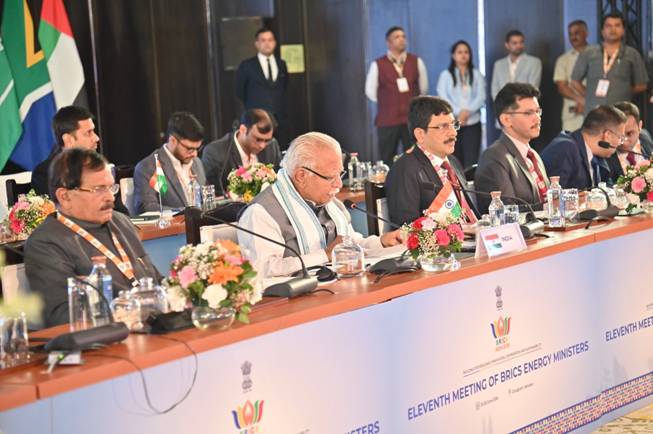
India successfully hosted the 11th BRICS Energy Ministers’ Meeting in Gurugram, Haryana, on Thursday under its BRICS Chairship 2026, with member nations reaffirming their commitment to strengthening cooperation in energy security, sustainability, innovation and resilient infrastructure.
Held under the overarching theme “Building for Resilience, Innovation, Cooperation and Sustainability” and guided by the Energy Track theme “Energy for All”, the meeting brought together Energy Ministers, Vice Ministers and senior officials from BRICS countries. Representatives from leading international organisations, including the International Solar Alliance (ISA), Global Biofuels Alliance (GBA) and New Development Bank (NDB), also participated in the deliberations.
A major highlight of India’s Chairship was the launch of the BRICS Digital Centre of Excellence for Smart Grids and Energy Storage, established under the BRICS Energy Research Cooperation Platform (ERCP). The Centre will function as a collaborative platform for knowledge sharing, capacity building, policy exchange and pilot initiatives among BRICS nations.
The meeting concluded with the adoption of the 11th BRICS Energy Ministers’ Joint Communiqué, reflecting the collective vision of member countries to deepen cooperation on energy security, sustainability, innovation, resilient infrastructure and capacity building.
Three Key Priority Areas
The ministers deliberated on three major themes:
- Energy Security and Sustainability: Resilient energy systems, diversified energy sources, critical minerals, supply chain resilience, smart grids, energy storage and affordable energy.
- Energy Access and Equity: Universal access to affordable, reliable and sustainable energy, clean cooking solutions, financing, capacity building and support for developing economies.
- Technology and Innovation: Smart grids, hydrogen value chains, artificial intelligence, digitalisation, biofuels, carbon capture technologies, energy efficiency and research collaboration.
The ministers reaffirmed that every country should have the flexibility to pursue its own energy transition based on its national circumstances, development priorities and energy pathways.
India Showcases Rapid Energy Transformation
Addressing the ministerial meeting, Union Minister for Power and Housing & Urban Affairs Manohar Lal said energy remains the foundation of economic growth, social progress and human development. He stressed that developing countries require adequate policy space, financial resources and time to achieve sustainable development while meeting the aspirations of their citizens.
Highlighting India’s remarkable progress, the minister said the country has emerged as the world’s third-largest producer and consumer of electricity, with an installed power generation capacity of nearly 540 GW, of which more than 50 per cent now comes from non-fossil fuel sources.
He noted that India’s solar capacity has grown from around 3 GW in 2014 to over 154 GW, while flagship initiatives such as PM Surya Ghar: Muft Bijli Yojana are accelerating rooftop solar adoption and citizen participation in the clean energy transition.
The minister also highlighted India’s ambitious targets of achieving over 400 GWh of energy storage capacity by 2032 and 100 GW of nuclear power capacity by 2047. He further underlined India’s achievement of 20 per cent ethanol blending ahead of schedule and its leadership in global initiatives such as the Global Biofuels Alliance and the International Solar Alliance.
Major Outcomes of India’s BRICS Chairship
Apart from launching the Digital Centre of Excellence, the meeting delivered several important outcomes:
- Adoption of the BRICS Guiding Principles on Smart Grids and Energy Storage, promoting resilient and digitally enabled power systems.
- Appreciation for progress on the BRICS Joint Report on Hydrogen Value Chains 2026, aimed at enhancing cooperation on hydrogen technologies, standards and industrial applications.
- Approval of updated Terms of Reference for the BRICS Energy Research Cooperation Platform (ERCP) to strengthen institutional cooperation in research and technology.
- Support for continued collaboration in research, innovation and capacity building across BRICS nations.
India also organised side events on Clean Coal Technologies and Raising Electrical Appliance Standards, providing a platform for policymakers, industry experts and international organisations to exchange best practices in energy efficiency and sustainability.
Joint Communiqué Highlights
The Joint Communiqué reaffirmed that energy security remains central to BRICS cooperation and stressed the need for diversified, resilient and transparent energy systems and supply chains.
The ministers recognised that access to secure, affordable, reliable and sustainable energy is critical for economic growth, industrialisation, employment generation and improving quality of life.
They also emphasised cooperation in renewable energy, hydrogen, biofuels, energy storage, digitalisation, critical minerals, carbon capture technologies and energy efficiency, while underlining the importance of affordable financing for energy transitions.
Recognising the importance of research and youth engagement, the ministers supported the organisation of the BRICS Youth Energy Summit during India’s Chairship and reaffirmed their commitment to expanding collaboration through the BRICS Energy Research Cooperation Platform.
The ministers appreciated India’s leadership in advancing BRICS energy cooperation and expressed confidence in continuing the momentum under China’s BRICS Chairship in 2027.