
CM Hemant Soren Sounds War Cry Over Mineral Rights, Says Jharkhand Will Lose ₹8,000-10,000 Crore Annually
‘Minerals belong to Jharkhand, land belongs to Jharkhand—then why should decisions on our rights be taken in Delhi?’
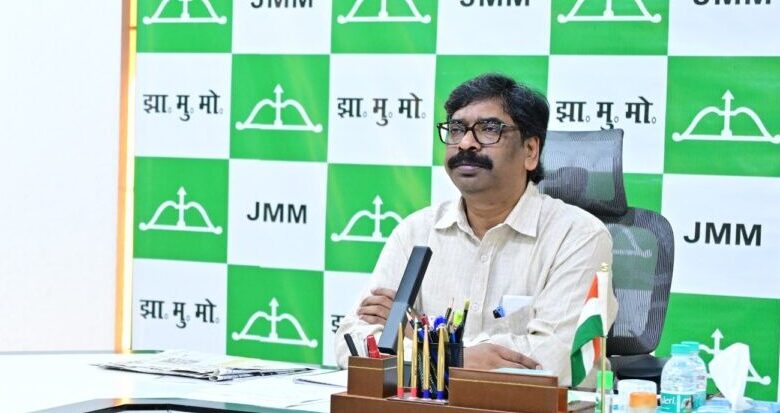
In what could be termed as a new tension brewing between Centre and State relations, Jharkhand Chief Minister Hemant Soren has sounded a war cry against the Centre over the passage of the Mines and Minerals (Development and Regulation) Amendment Bill, 2026, warning that the State will launch a massive movement if the legislation is not withdrawn.
The political battle is being accompanied by a serious fiscal concern. Jharkhand is staring at a potential annual revenue loss of around ₹8,000-10,000 crore, according to estimates being cited in the State’s political campaign against the legislation. The Chief Minister has argued that restricting the State’s power to levy mineral-related charges will sharply reduce its fiscal space at a time when mining revenue is critical to Jharkhand’s development and welfare programmes.
The Economic Times, citing Soren’s letter to Prime Minister Narendra Modi, reported that the Mineral Bearing Land Cess alone was expected to generate around ₹7,110 crore annually. Soren also said mining revenue accounted for 84.9% of Jharkhand’s own non-tax revenue in 2024-25.
‘Jharkhand Will Launch a Movement the Entire Country Will Watch’
Soren has warned that if the Centre does not withdraw the amendment, Jharkhand will launch a movement that the entire country will watch.
The proposed agitation, according to the Chief Minister, will not remain confined to Ranchi. The JMM intends to take the issue to every district, block, panchayat and city of the State.
The warning comes after Parliament passed the amendment restricting the power of States to impose taxes, cess and other levies on mineral rights and mineral-bearing lands.
Soren has described the legislation as an attack on Jharkhand’s rights over its mineral resources and has linked the issue to the broader question of fiscal federalism and the rights of mineral-producing States.
Jharkhand Faces ₹8,000-10,000 Crore Annual Revenue Shock
The most immediate concern for Jharkhand is financial.
The State’s political leadership fears that the new law could deprive Jharkhand of ₹8,000-10,000 crore every year in mineral-related revenue, severely restricting its fiscal capacity.
The Mineral Bearing Land Cess is at the centre of the controversy. Soren has told the Centre that this cess was expected to generate approximately ₹7,110 crore annually and was intended to provide additional resources for addressing the economic, social and environmental consequences of mining.
The JMM has gone further in its assessment, claiming that the legislation could deprive Jharkhand of nearly ₹15,000 crore annually when the broader impact on mineral-related revenues is considered.
The differing estimates underline the scale of the potential impact, even though the final financial effect will depend on the actual implementation of the amended law and the revenue streams affected.
‘Minerals Are Jharkhand’s, Land Is Jharkhand’s—Why Should Delhi Decide?’
At the heart of Soren’s opposition is a fundamental question:
If the minerals come from Jharkhand’s land and the State and its people bear the consequences of mining, why should decisions concerning the State’s mineral rights be taken in Delhi?
Jharkhand is one of India’s richest mineral-producing States, with enormous reserves of coal, iron ore and other minerals.
Soren has argued that mining cannot be viewed merely as an economic activity. The State and its people have to deal with displacement, land alienation, environmental degradation, pollution, pressure on infrastructure and disruption of traditional livelihoods and social systems.
He has therefore maintained that Jharkhand must have adequate fiscal resources to address the consequences of mineral extraction.
Mining Revenue Critical to Jharkhand’s Finances
The financial significance of the issue is difficult to overstate.
According to the State Economic Survey cited by Soren, mining revenue accounted for 84.9% of Jharkhand’s own non-tax revenue in 2024-25.
Soren has argued that revenues generated from minerals, including royalty, District Mineral Foundation contributions and other statutory receipts, enable the State to finance roads, drinking water, healthcare, education, livelihood programmes, rural infrastructure, rehabilitation and social-security measures in mining-affected areas.
Any substantial reduction in this revenue stream, he has warned, could place considerable pressure on Jharkhand’s finances.
Impact on Welfare Schemes
Soren has also linked the mineral revenue issue to the State’s welfare programmes.
He has specifically referred to Mukhyamantri Maiya Samman Yojana, Abua Awas Yojana, pensions, education and healthcare, arguing that a reduction in fiscal resources could affect the State’s ability to sustain such programmes.
The Chief Minister has warned that an abrupt loss of revenue without an alternative and sustainable source of funds could have consequences well beyond government finances, including dissatisfaction among people in areas that have already borne the adverse consequences of mining.
JMM Opens Front Against Centre
The Jharkhand Mukti Morcha has now transformed the MMDR amendment into a broader political battle over State rights, federalism and control over natural resources.
The party has warned of a statewide mobilisation and has indicated that the movement could extend from districts and blocks to panchayats and cities.
The issue is particularly sensitive in Jharkhand because mining has been central to the State’s economy for decades, while the political debate over who benefits from the State’s mineral wealth has remained unresolved.
Centre-Jharkhand Conflict Could Intensify
The amendment could become a fresh flashpoint in Centre-State relations.
The Centre’s argument is that varying State-level taxes and levies have created uncertainty for the mining industry through multiple charges, differing rates and retrospective demands. The Government says a predictable and uniform fiscal framework is necessary to encourage investment and ensure the commercial viability of mining operations.
Jharkhand sees the matter differently.
For the State government, the issue is not simply taxation. It concerns how much fiscal authority a mineral-rich State should retain over resources extracted from its own territory.
That makes the dispute substantially larger than the question of a particular cess or tax.
‘The Country Will Watch Jharkhand’s Movement’
Soren’s warning now shifts the battle from Parliament to the political ground in Jharkhand.
The Chief Minister has already urged the Centre to reconsider the legislation and has raised concerns over its impact on the State’s finances and its ability to deal with the social and environmental costs of mining.
If the JMM follows through on its threat of a statewide agitation, the mineral-rights issue could become one of the biggest political battles in Jharkhand in the coming months.
For Hemant Soren, the message is unequivocal:
Jharkhand’s minerals may power India’s industrial growth, but the State wants a decisive say in how the wealth generated from those resources is taxed, shared and used for the people who live on the land from which the minerals are extracted.
The coming weeks will determine whether the Centre and Jharkhand can find common ground—or whether the dispute over mineral rights develops into a major constitutional, political and economic confrontation.