
BPCL Says All 893 E20 Petrol Samples Meet Prescribed Ethanol Standards
IOCL, BPCL and HPCL have questioned the sampling and testing methodology adopted by Karnataka Government
Read in your preferred Language :
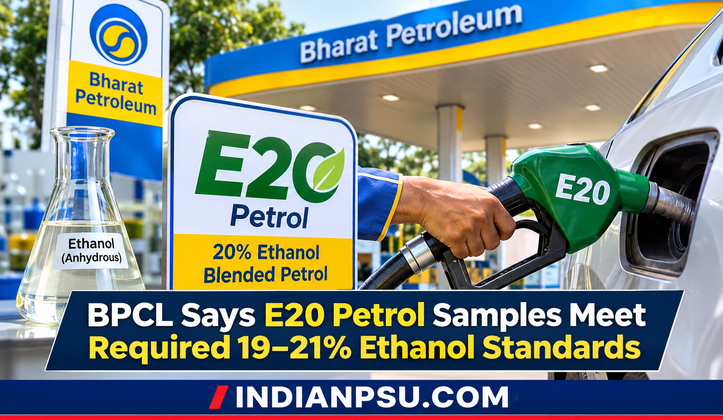
Bharat Petroleum Corporation Limited (BPCL) has reiterated that E20 petrol supplied through public sector oil marketing companies (OMCs) conforms to prescribed quality standards, with all 893 samples tested across 27 States and Union Territories recording ethanol content within the stipulated range of 19–21%.
The clarification comes amid growing public debate over the ethanol content of petrol, particularly following allegations in Karnataka that certain retail outlets were selling petrol containing ethanol levels as high as 26–31%.
According to BPCL, the nationwide quality-monitoring exercise was conducted by OMCs in coordination with the Centre for High Technology (CHT), under the Ministry of Petroleum and Natural Gas.
Of the 893 samples tested, 280 were examined by BPCL, 330 by Indian Oil Corporation Limited (IOCL) and 283 by Hindustan Petroleum Corporation Limited (HPCL). All samples were found compliant with the prescribed standards under IS 17021 of the Bureau of Indian Standards (BIS).
Karnataka Controversy
Addressing concerns triggered by a photograph circulated on social media during an E20 petrol awareness demonstration in Karnataka, BPCL explained that the image captured an intermediate stage of the ethanol separation test rather than its final result.
The demonstration involved mixing 100 ml of E20 ethanol-blended petrol with 30 ml of water to separate ethanol from petrol. BPCL said the mixture initially turns hazy or milky, which is normal, and requires time for the two layers to separate completely.
The company clarified that the photograph was shared before the separation process was completed and therefore did not represent the final reading. The concerned officer subsequently removed the post to avoid further misinterpretation.
BPCL maintained that the sample tested during the demonstration was within prescribed specifications.
OMCs Seek Transparent Testing
The three public sector oil marketing companies have also questioned the sampling and testing methodology adopted during the Karnataka Government’s October 2026 exercise, calling for joint sampling and independent verification through authorised laboratories.
The companies have maintained that fuel quality must be assessed through established statutory procedures and testing protocols.
Reiterating its commitment to quality assurance, BPCL urged consumers and stakeholders to rely on verified testing procedures rather than incomplete demonstrations or misleading interpretations of test results.