

Man With a Mission: How Gurdeep Singh Transformed NTPC!
From engineer trainee to CMD, Gurdeep Singh’s journey mirrors NTPC’s transformation into a new-age energy company
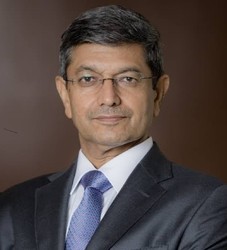
From a thermal power giant to an integrated energy company spanning renewables, storage, nuclear, mining and new-energy technologies, Gurdeep Singh has spent a decade reshaping NTPC—and his biggest bet may still be ahead.
- There are CMDs who run companies.
- And then there are CMDs who change the direction of companies.
Gurdeep Singh, CMD – NTPC, beyond all doubts, belongs firmly to the second category.
When Singh took charge as Chairman and Managing Director of NTPC in February 2016, he inherited India’s undisputed power-generation giant. NTPC was already synonymous with large-scale thermal generation, engineering excellence and reliable electricity.
But the energy world was changing.
Renewables were moving rapidly into the mainstream. India’s electricity demand was rising. Energy security was becoming strategically important. Storage was emerging as the missing link in the clean-energy transition. Nuclear power was returning to the national conversation.
Singh’s response was not to abandon the NTPC that India knew.
It was to build another NTPC on top of it.
Nearly a decade later, that transformation is visible everywhere—from the company’s capacity numbers and balance sheet to its ambitions in renewable energy, storage, nuclear power, mining and emerging technologies.
The numbers are impressive.
The strategic shift is even more significant.
The biggest change was not capacity. It was ambition.
NTPC has always been a large company.
That is why simply saying Gurdeep Singh made NTPC bigger does not adequately describe his tenure.
The more consequential achievement has been changing what NTPC sees itself as.
The company today describes its future as that of a diversified and integrated energy company, rather than merely a conventional power generator. Its businesses increasingly stretch across generation, mining, power trading, renewables, storage, nuclear energy and new technologies.
That change in corporate identity is the essence of the Gurdeep Singh era.
The old NTPC was built around one fundamental proposition: generate electricity at scale and reliably supply India’s growth.
The new NTPC is being built around a much broader proposition: participate across the energy value chain and prepare for whatever India’s future electricity system demands.
That is a considerably more ambitious mission.
From 43 GW to more than 90 GW
The transformation can first be seen in the hard numbers.
NTPC’s installed capacity has risen from 43.1 GW in FY14 to around 91 GW today, more than doubling over the period. The company currently has more than 90 GW of installed capacity and another 35 GW-plus under construction.
In FY26 alone, the group added 9.6 GW, its highest-ever annual capacity addition. Almost 60% of that addition—5.48 GW—came from non-fossil sources.
But the real significance lies in the composition of that growth.
NTPC is no longer expanding only through large thermal stations.
Renewables, hydro, storage and nuclear are increasingly becoming part of its growth architecture.
That is a fundamental change for an organisation whose name has been inseparable from coal-fired electricity for most of its existence.
Singh did not turn his back on thermal power
This is perhaps the most important distinction in understanding his strategy.
Gurdeep Singh did not attempt to make NTPC fashionable by pretending that India’s thermal power requirements had disappeared.
They have not.
India needs more electricity, not less. Renewable energy is growing rapidly, but the grid still requires reliable and dispatchable power. Peak demand must be met at night, during periods of low renewable generation and when weather conditions do not cooperate.
Gurdeep Singh’s approach has been pragmatic.
Build renewables—but strengthen the conventional fleet.
- Accelerate decarbonisation—but protect energy security.
- Invest in the future—but continue supplying the electricity India needs today.
NTPC’s FY26 performance illustrates that balance. The company generated 432 billion units, contributing about 24% of India’s total electricity generation, while its coal-based stations achieved a plant load factor of 72.04%.
At the same time, NTPC is investing in biomass co-firing, water conservation, ash utilisation and carbon-management initiatives. Biomass co-firing at its group thermal stations reached about 1.52 million tonnes in FY26, more than twice the previous year’s level.
- This is not an either-or energy strategy.
- It is a distinctly Indian energy strategy.
The renewable-energy pivot
Perhaps nowhere is the change more visible than in renewable energy.
NTPC Green Energy has emerged as a major growth platform. Renewable generation increased to 14.6 billion units in FY26, more than double the previous year.
The targets are even more revealing.
NTPC now aims for 149 GW of total capacity by 2032, including 60 GW of renewable energy, and has set an aspiration of 244 GW by 2037, excluding storage.
The company had earlier set a lower 2032 target of 130 GW. Under Singh’s leadership, that ambition was raised to 149 GW and subsequently extended to 244 GW by 2037. NTPC itself has described the revised targets as part of its long-term expansion strategy.
That is not merely an expansion plan.
It is a statement about where Gurdeep Singh believes NTPC belongs in India’s future energy hierarchy.
From coal security to energy security
Another important part of the Singh transformation has happened away from the power plants.
Coal mining has become a much more important component of NTPC’s strategy.
In FY26, captive coal production reached 48.65 million tonnes, with NTPC’s mining operations strengthening the company’s fuel-security position. The company now has six operational coal mines and three under development.
This is significant because Singh’s strategy treats energy security as a system rather than simply a question of installed generation capacity.
A power station without fuel is not energy security.
A renewable project without adequate transmission or storage cannot guarantee supply around the clock.
A rapidly expanding electricity system without financial strength cannot sustain investment.
The Singh approach therefore increasingly connects fuel, generation, storage, finance, technology and market access.
The nuclear gamble
Then comes perhaps the boldest element of the transformation: nuclear power.
For an organisation historically associated with thermal generation, NTPC’s push into nuclear is a major strategic departure.
India has set an ambitious nuclear expansion agenda, and NTPC wants to play a significant role. The company aims to contribute around 30 GW of nuclear capacity, with the 2.8 GW Mahi Banswara project in Rajasthan among its immediate priorities.
The timing is significant.
The Indian government is attempting to dramatically expand nuclear power as part of its long-term energy-security and decarbonisation strategy. Recent policy developments are also opening the sector to a wider set of participants, although regulatory and technology challenges remain.
For NTPC, nuclear represents something beyond another source of electricity.
It is a bet on the future structure of India’s baseload and firm power requirements.
If the renewable transition is to proceed at scale while electricity demand continues to rise, India will need sources of reliable low-carbon electricity.
Singh wants NTPC to be one of those sources.
Storage: the next big frontier
Singh’s strategy also recognises a problem that the renewable-energy boom has made impossible to ignore.
Electricity has to be available when consumers need it—not merely when the sun shines or the wind blows.
That makes storage increasingly central.
NTPC is building capabilities in battery energy storage systems and pumped-storage projects, while also exploring longer-duration technologies.
This is another example of the changing NTPC.
The company is no longer simply asking: How many megawatts can we generate?
It is increasingly asking: How can we make the electricity system reliable, flexible and affordable?
That is a much broader question.
And it requires a much broader company.
The balance sheet has kept pace with the ambition
There is always a danger when a large PSU announces enormous expansion plans: ambition can outrun financial discipline.
So far, NTPC’s financial performance provides an important counterpoint.
The group reported its highest-ever consolidated PAT of ₹27,546 crore in FY26, up 15% year-on-year. Standalone PAT rose 18% to ₹23,162 crore, while group EBITDA reached ₹60,564 crore and net worth stood at around ₹2.03 lakh crore.
Even more importantly, the consolidated debt-equity ratio improved from 1.34 to 1.32, despite the company’s significant investment programme. Receivable days fell from 31 to 15 days.
That matters enormously.
A transformation of this scale requires capital.
And capital requires credibility.
Singh’s NTPC has so far managed to combine expansion with a relatively disciplined financial profile.
₹16.86 lakh crore: the ultimate test
The next phase will be far more demanding.
NTPC’s revised plan envisages cumulative capital expenditure of around ₹16.86 lakh crore up to FY37 across thermal, hydro and pumped storage, renewables, battery storage, mining and nuclear.
The scale is staggering.
The company is effectively preparing to rebuild itself for another generation of India’s energy demand.
At the company’s latest annual general meeting, Singh reiterated the ambition to reach 244 GW by 2037, with investment of nearly ₹17 lakh crore.
The challenge now is no longer whether NTPC has a vision.
It is whether NTPC can execute that vision at extraordinary scale.
Land acquisition, financing, project execution, transmission connectivity, technology choices, fuel availability, regulatory approvals and returns on capital will all matter.
The next decade will therefore test Singh’s transformation more severely than the previous one.
Technology is quietly changing NTPC
The transformation is also happening inside the organisation.
Artificial intelligence, machine learning, predictive analytics, digital twins and advanced forecasting are increasingly being incorporated into power generation, renewable operations, mining and maintenance.
That may sound less dramatic than a new nuclear project or a 5-GW renewable park.
But it could prove just as important.
A company operating tens of gigawatts of assets across multiple technologies cannot be managed in the future using the same systems and processes that worked when it was primarily a thermal generator.
Digitalisation allows NTPC to become more data-driven, more predictive and potentially more efficient.
In effect, Singh has been trying to change both the business portfolio and the operating DNA of NTPC.
The man who knew NTPC from the inside
There is an interesting symmetry to Singh’s career.
He began his professional journey at NTPC as an Engineer Trainee in 1987.
He subsequently gained experience outside the organisation and eventually headed Gujarat State Electricity Company before returning to NTPC as CMD.
That gave him something few external CEOs could have possessed: an intimate understanding of NTPC’s institutional strengths combined with exposure to other models of doing business.
His leadership therefore did not begin with the question of how to fix a broken company.
It began with a different question:
What should a successful NTPC become in the next era of India’s energy growth?
The answer has gradually emerged.
Bigger.
More diversified.
More technologically capable.
More commercially ambitious.
And less dependent on a single form of generation.
The legacy question
Ultimately, Gurdeep Singh’s legacy should not be judged by one power station, one renewable project or even one financial year.
His bigger contribution is strategic.
He took an organisation whose historical identity was built around thermal power and began repositioning it for a world in which energy security, decarbonisation, storage, nuclear power, digital technology and renewable generation will all coexist.
He did not dismantle the old NTPC.
He expanded its definition.
That distinction matters.
The energy transition is often presented as a story of replacement: coal replaced by renewables, conventional power replaced by clean power.
Singh’s NTPC represents a different proposition.
For India, the transition may have to be additive before it can become substitutive.
The country needs more power before it can afford to rely on less of anything.
That is why Singh’s strategy has been built around scale, reliability and diversification rather than ideology.
From one mission to another
NTPC was created to power India’s development.
Four decades later, Gurdeep Singh is attempting to prepare it for a new phase of that development.
The company’s latest numbers tell the story.
From 43.1 GW in FY14 to around 91 GW today.
From a predominantly thermal-generation identity to a portfolio spanning renewables, storage, mining, trading and nuclear.
From a 130-GW target to 149 GW by 2032 and 244 GW by 2037.
And now a planned investment programme of around ₹16.86 lakh crore.
The scale is enormous.
But perhaps the most important transformation is not visible in any of those numbers.
It is the change in ambition.
The NTPC that Gurdeep Singh inherited was built to power the India of yesterday.
The NTPC he has spent the last decade reshaping is being built to power the India of tomorrow.
That is why Gurdeep Singh’s story is not simply the story of a CMD who expanded a PSU. It is the story of a man who changed the mission of one of India’s most strategically important companies.
Editor’s Note
Perhaps there are some professionals whose contribution cannot simply be measured by age or by the conventional retirement clock. Gurdeep Singh is one such professional.
A thorough professional in his own right, Singh is notably media-shy and has always appeared to believe in letting his work do the talking. For him, it has been about one thing—work, and work alone.
And that is what makes his journey at NTPC particularly remarkable. The organisation he has helped shape today is one that, two decades ago, perhaps no one could have imagined in their wildest dreams.
Under his leadership, NTPC has evolved far beyond its traditional identity as a power-generation company, expanding into renewables, storage, nuclear power, mining, power trading and a range of emerging energy technologies.
For Singh, the scale of this transformation may well be the most compelling testament to what sustained, purposeful leadership can achieve.