
India’s Steel Output Sustains Growth in May 2026; Consumption Rises 9%, Capacity Expansion Gains Momentum
Finished steel consumption surged 9% year-on-year in May 2026, while capacity expansion, green steel adoption, and strong infrastructure demand continued to drive growth
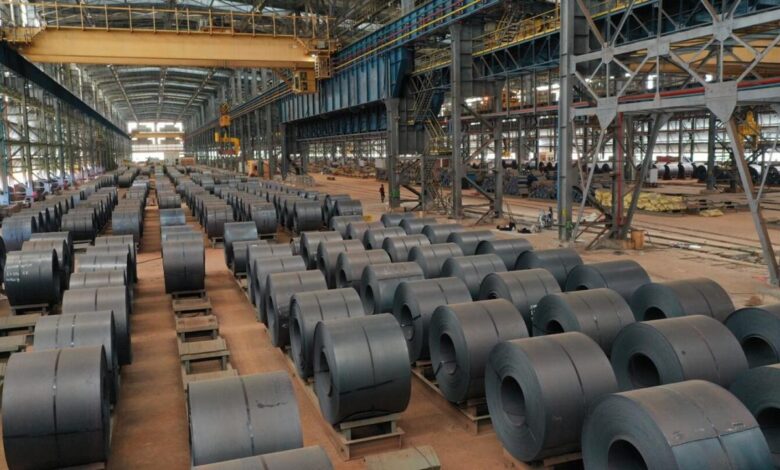
India’s steel industry maintained its growth momentum in May 2026, supported by strong domestic demand from infrastructure, construction, and manufacturing sectors. According to provisional Joint Plant Committee (JPC) data, crude steel production, finished steel output, and consumption all recorded healthy year-on-year growth during the month.
Steel Production and Consumption Continue Upward Trend
India’s crude steel production reached 14.21 million tonnes in May 2026, registering a 2.9% year-on-year (YoY) increase. Hot metal production grew by 2.0% YoY, while pig iron production stood at 0.77 million tonnes, up 1.1% YoY.
Finished steel production rose significantly to 13.94 million tonnes, marking a 7.7% YoY increase. Domestic demand remained robust, with finished steel consumption reaching 14.33 million tonnes, recording a strong 9.0% YoY growth.
During April–May 2026, crude steel production stood at 28.04 million tonnes, up 2.7% compared to 27.30 million tonnes produced during the corresponding period last year. Finished steel production increased by 6.4% to 27.36 million tonnes, while finished steel consumption grew 8.7% to 27.36 million tonnes, driven by sustained demand across key consuming sectors.
Imports and Exports Rise; India Remains Net Importer
Steel trade activity also witnessed significant growth during May 2026.
Imports increased to 0.69 million tonnes, up 62.5% YoY from 0.42 million tonnes in May 2025. Exports rose to 0.51 million tonnes, registering a 29.9% YoY increase over 0.39 million tonnes in the same month last year.
For the April–May 2026 period, imports stood at 1.37 million tonnes, while exports reached 0.98 million tonnes, making India a net importer of steel during the period. Compared to April–May 2025, imports grew by 45.0%, while exports increased by 27.4%.
Capacity Expansion Accelerates
India’s crude steelmaking capacity reached approximately 220 million tonnes per annum (MTPA) during FY 2025-26, keeping the sector on course toward the National Steel Policy target of 300 MTPA by 2030.
In a major development, Steel Authority of India Limited (SAIL) approved the expansion of its Bhilai Steel Plant from 6.8 MTPA to 10.2 MTPA.
Meanwhile, JSW Steel commenced construction of its integrated steel plant at Paradip, Odisha, with a planned phased capacity of 13.2 MTPA, reinforcing industry-wide investment momentum.
Green Steel Initiative Gains Traction
The Ministry of Steel’s Green Steel Initiative continues to witness encouraging participation.
As of May 31, 2026, green steel certificates had been issued to 94 producers across 15 states, covering products such as TMT bars, HR and CR coils, plates, wire rods, and pipes. A majority of certified products achieved the highest five-star rating, reflecting growing adoption of sustainable steelmaking practices, particularly among secondary and mid-sized producers.
Steel Prices Ease Amid Rising Input Costs
Domestic steel prices softened during May 2026 across major product categories.
TMT/Rebar prices declined by approximately 1.3% month-on-month (MoM), although they remained 4.5% higher YoY, marking the first positive annual growth after several months of weakness.
Flat steel products also witnessed marginal declines, with HR Coil and GP Sheet prices easing by around 0.2% MoM.
Raw Material Costs Continue to Rise
Input cost pressures intensified during the month.
NMDC Limited increased domestic iron ore prices by ₹200 per tonne in May 2026. MOIL Limited produced 0.17 million tonnes of manganese ore, up 4% MoM, while manganese ore prices declined by 4% during the period.
Globally, iron ore prices remained volatile. International coking coal prices increased by 2.8% MoM to US$239 per tonne, maintaining elevated cost pressures for integrated blast furnace-basic oxygen furnace (BF-BOF) producers. International scrap prices also moved higher, adding to cost challenges for electric-route steelmakers.
Outlook Remains Positive
Despite margin pressures arising from softer steel prices and rising raw material costs, the outlook for the Indian steel sector remains positive. Strong government-led infrastructure spending, continued urbanization, and expanding manufacturing activity are expected to support steel demand growth in the coming quarters.