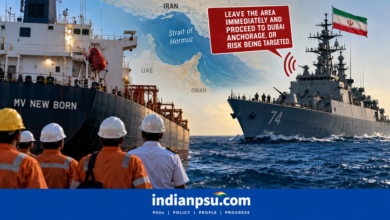

IOC Contemplates Domestic Tanker Fleet as High Freight Costs Erode Crude Oil Discounts
Indian Oil Corporation seeks greater control over crude transportation costs and expanded storage capacity to protect refining margins and strengthen energy security

Read in your preferred Language :
Indian Oil Corporation (IOC) is reportedly contemplating for development of a larger domestic tanker fleet and expanded oil storage infrastructure as rising shipping costs erode the benefits of importing discounted crude oil.

Sources say that IOC Chairman A.S. Sahney has highlighted the growing burden of crude transportation expenses, which are reducing the financial advantages of procuring oil at discounted prices. The development underscores the need for Indian refiners to strengthen control over logistics costs amid volatile international shipping rates and geopolitical uncertainties.
For India, one of the world’s major crude oil importers, transportation expenses have become an increasingly important factor in determining the actual cost of imported petroleum.
Rising Freight Costs Offset Crude Oil Discounts
Indian refiners have sought to optimise procurement costs by sourcing crude oil from different international markets, including Russia. However, longer shipping routes, geopolitical tensions and fluctuations in global tanker rates can reduce the savings achieved through discounted purchases.
The final cost of crude oil depends not only on its purchase price but also on freight, insurance and other transportation-related expenses.
When shipping charges rise sharply, the effective discount on imported crude shrinks, putting pressure on refining margins. This creates an additional challenge for oil marketing companies operating in a market where domestic fuel pricing may limit their ability to pass on higher costs to consumers.
For IOC, controlling transportation expenses is therefore becoming an important component of its broader strategy to improve operational efficiency and manage costs.
Domestic Tanker Fleet in Focus
IOC’s push for a larger domestic tanker fleet reflects the strategic importance of reducing dependence on international shipping markets.
A stronger Indian-controlled fleet could provide refiners with greater flexibility in arranging crude transportation, managing shipping schedules and responding to sudden changes in freight rates.
However, the financial benefits would depend on factors such as vessel acquisition costs, financing, fleet utilisation, operating expenses and prevailing charter rates.
Developing a domestic fleet would also require coordination with India’s shipping industry and relevant maritime authorities. A carefully structured expansion could help improve the availability of tankers for the country’s crude oil import requirements while supporting the development of domestic maritime capabilities.
The initiative could also create opportunities for Indian shipping companies and vessel operators if additional transportation capacity is developed.
Storage Expansion to Strengthen Energy Security
Alongside tanker availability, expanded storage capacity is another important element of India’s efforts to improve energy security.
Adequate crude oil storage allows refiners to manage fluctuations in supply, optimise procurement schedules and maintain operational continuity during disruptions to international shipping or oil supplies.
Additional storage capacity could also provide greater flexibility in purchasing crude when market conditions are favourable, subject to available infrastructure, financing and inventory-management requirements.
For a country heavily dependent on imported crude oil, transportation and storage infrastructure are critical links in the energy supply chain.
Implications for India’s Oil Marketing Companies
The issue extends beyond IOC. Bharat Petroleum Corporation Limited (BPCL) and Hindustan Petroleum Corporation Limited (HPCL) also depend on international crude supplies and maritime transportation.
Elevated freight rates can affect the economics of crude procurement across the refining sector, particularly when shipping costs rise faster than the savings available from discounted crude.
A larger domestic tanker fleet could potentially offer benefits across the industry, although the extent of those benefits would depend on how the fleet is owned, operated and made available to refiners.
For IOC, any move towards acquiring or securing additional tanker capacity would also involve investment decisions that need to be assessed against long-term transportation savings.
A Strategic Shift Beyond Crude Procurement
IOC’s emphasis on tanker capacity and storage highlights a broader challenge facing India’s energy sector: securing crude oil at competitive prices is only one part of the equation.
The cost and reliability of transporting that crude to Indian refineries are equally important in determining the overall economics of imports.
Reducing exposure to volatile freight markets could help Indian refiners improve cost predictability while strengthening the country’s ability to withstand international supply disruptions.
The key question now is how quickly India can expand its domestic shipping and storage capabilities and whether the resulting efficiencies can deliver sustained savings for its oil refining sector.