
Two Years After HD Kumaraswamy Ruled Out RINL Privatisation, Where Is the Revival?
RINL employees, industry observers, and the people of Andhra Pradesh are asking: "Kya Hua Tera Vaada?"
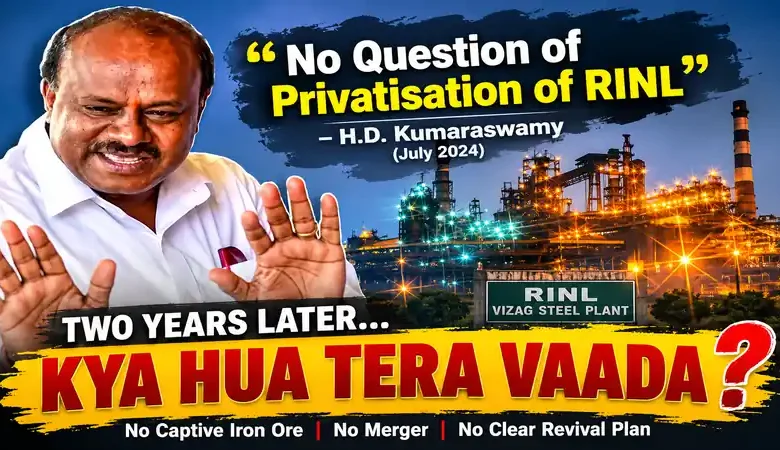
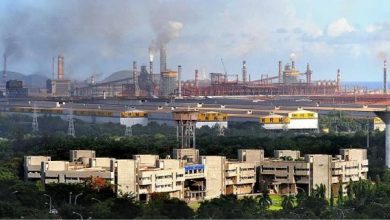
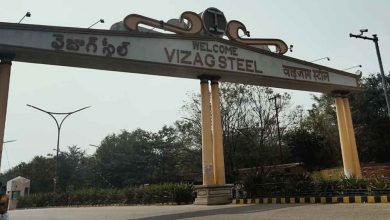
When Union Steel Minister H.D. Kumaraswamy visited the Visakhapatnam Steel Plant in July 2024, he made a categorical statement that brought immense relief to thousands of employees and their families.
“There is no question of privatization,” the Minister said, while also announcing that he was preparing a comprehensive revival proposal for the Prime Minister.
The assurance was widely welcomed. It appeared to signal a decisive policy shift towards Rashtriya Ispat Nigam Limited (RINL) after years of uncertainty.
Notably, www.indianpsu.com had, on 25 June 2024, reported that the Ministry of Steel was actively examining revival options, including the possibility of a re-merger of RINL with SAIL. The portal subsequently reported the Minister’s meetings with RINL officials, employee representatives and the Steel Executives Association, during which discussions on RINL’s future gained momentum.
Two years have now passed.
The obvious question is: What has changed?
Assurance Was Followed by Hope
The Minister’s statement generated expectations that RINL would soon receive a comprehensive revival package.
Employees expected decisive measures, including:
- Allocation of captive iron ore mines.
- Sustainable working capital support.
- Debt restructuring.
- Restoration of full production capacity.
- Filling of vacant positions through fresh recruitment.
- A long-term business strategy capable of making RINL globally competitive.
While the government subsequently approved financial support for the company, many stakeholders believe the larger structural issues remain unresolved.
The Biggest Challenge Still Exists
For decades, industry experts have maintained that RINL’s biggest disadvantage is the absence of captive iron ore mines.
Unlike several competing steel producers, RINL continues to purchase iron ore from the open market, significantly increasing production costs and affecting competitiveness.
Without addressing this core issue, many experts believe that financial assistance alone cannot ensure sustainable profitability.
What Happened to the Re-merger Discussion?
One of the significant developments reported during July 2024 was the possibility of exploring a re-merger of RINL with SAIL.
The proposal generated considerable interest because many believed it could provide financial stability, operational synergies and stronger market positioning.
However, nearly two years later, there has been little public clarity regarding the status of those discussions.
Was the proposal dropped?
Is it still under examination?
Or has the government chosen a different revival path?
Employees deserve answers.
Brain Drain Continues
Even as the uncertainty over RINL’s long-term future persists, the company continues to face another major challenge—the steady departure of experienced professionals and young engineers.
Years of limited recruitment, delayed career progression and concerns over future growth have affected employee morale.
Many believe that unless a clear roadmap is announced, attracting and retaining skilled professionals will remain an uphill task.
Revival Requires More Than Financial Assistance
Keeping RINL operational is undoubtedly important.
But merely ensuring survival cannot be the ultimate objective.
A successful revival requires:
- Raw material security.
- Operational efficiency.
- Capacity utilisation.
- Market competitiveness.
- Technology modernisation.
- Human resource strengthening.
- A clearly articulated long-term vision.
These are the benchmarks against which any revival package will eventually be judged.
Time for Accountability
When a Union Minister publicly declares that there is “no question of privatization,” it naturally creates expectations that a credible revival plan will follow.
Two years later, stakeholders are entitled to ask whether those expectations have been fulfilled.
The questions are straightforward:
- What tangible milestones have been achieved since July 2024?
- Why does RINL still lack captive iron ore mines?
- What is the present status of the RINL–SAIL re-merger proposal?
- What is the government’s long-term strategy for making RINL financially sustainable?
- By when can employees expect a comprehensive revival roadmap?
These are not political questions.
They are questions of governance, accountability and industrial policy.
RINL is one of India’s most significant public sector steel producers and a symbol of the aspirations of millions of people, particularly in Andhra Pradesh. The assurance against privatization was welcomed across the board. It is now time for that assurance to be matched by visible progress.
The government has repeatedly affirmed its commitment to strengthening strategic public sector enterprises. Employees, industry observers and citizens now look forward to concrete outcomes that will secure RINL’s future—not merely preserve its existence, but restore it as a strong, competitive and self-sustaining steel producer.
Till then, the inevitable question from employees, industry observers, and the people of Andhra Pradesh will remain: “Kya Hua Tera Vaada?”
Editor's Take: RINL's path to sustained profitability will remain extremely challenging unless its long-standing raw material disadvantage is addressed. Without access to captive iron ore mines, the steelmaker will continue to face significantly higher production costs than many of its competitors. A lasting solution could involve the allocation of captive iron ore mines or a strategic integration with iron ore-rich public sector companies such as SAIL, NMDC, or an appropriate combination of both. Without such structural reforms, turning RINL's balance sheet from red to green is likely to remain an uphill task.