
SAIL Board Faces Director Crunch as Vacancies Complicate Management and Governance
With the Board potentially shrinking to nine members from October 1, the pressure for early appointments is likely to intensify
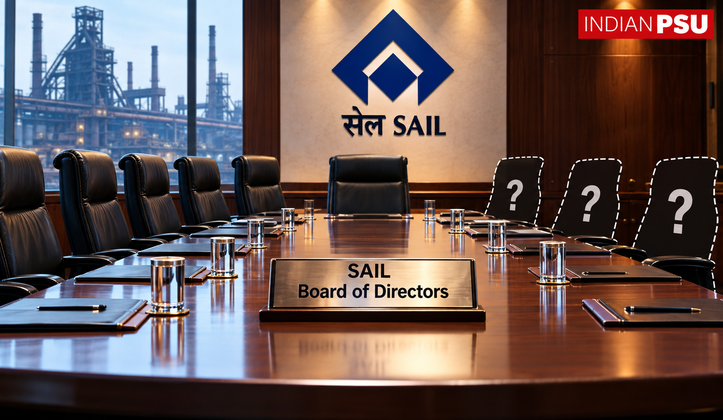
The Steel Authority of India Limited (SAIL) is facing a widening shortage of directors on its Board, with vacancies in key positions emerging as a growing concern for the Maharatna steelmaker at a time when the company is required to take major modernisation, investment and strategic decisions.
SAIL has 18 sanctioned positions on its Board, comprising nine functional directors, seven independent directors and two Government-nominated members. However, only 10 positions are currently occupied.
The situation is set to become more acute from October 1, 2026, when Government-nominated Board member Abhijit Narendra, a Joint Secretary-level Indian Revenue Service officer, is scheduled to retire on September 30. His retirement would reduce the Board’s strength to nine, unless a replacement is appointed before then.
Independent Directors Remain the Biggest Gap
The most striking gap is among independent directors. Against seven sanctioned positions, SAIL currently has only one independent director, Pranoy Roy, according to the company’s current Board listing.
The functional director category is comparatively better staffed, with eight of the nine sanctioned positions occupied. These include CMD Dr Ashok Kumar Panda, Director (Personnel) K.K. Singh, Director (Mining) Manish Raj Gupta, Director (Commercial) T.N. Natrajan and the directors-in-charge of the Bokaro, Bhilai, Rourkela and Durgapur steel plants.
Dr Panda is also holding additional charge of Director (Finance), according to SAIL’s Board information.
Board Committees Also Face Pressure
The shortage is not merely a question of the number of directors occupying Board seats. The presence of independent directors is particularly important for the constitution and functioning of several Board committees under the applicable corporate-governance framework.
SAIL’s own governance disclosures show the role played by independent directors in committees such as the Audit Committee and Stakeholders Relationship Committee.
The reported shortage has therefore raised concerns over whether the required composition and quorum of certain committees can be maintained while the company deals with major corporate decisions. Dainik Jagran reported that SAIL’s management is facing difficulty in obtaining approvals for modernisation, large investments and strategic and policy matters because of the incomplete Board structure.
SAIL Looks to Steel Ministry and PESB
The management is understood to be seeking early action from the Ministry of Steel and the Public Enterprises Selection Board (PESB) to fill vacant independent-director and Government-nominated positions.
The issue assumes greater significance because SAIL itself is in the midst of a major phase of investment and modernisation. The company is a Schedule ‘A’, Maharatna CPSE under the administrative control of the Ministry of Steel, with the Government of India holding 65% of its equity as of March 31, 2025.
At the same time, the process of filling senior leadership positions is continuing. PESB has already initiated the process for appointment of SAIL’s next Chairman & Managing Director, with the vacancy dated April 2, 2026.
A Boardroom Problem at a Critical Time
For SAIL, the Board vacancies come at a particularly important juncture. Decisions involving capital expenditure, plant modernisation, investment proposals and long-term strategy require an adequately constituted governance structure.
The immediate challenge is therefore two-fold: ensuring that the Board has sufficient strength to discharge its statutory and governance responsibilities, and restoring the independent-director component required for effective committee functioning and regulatory compliance.
With the Board potentially shrinking to nine members from October 1, the pressure for early appointments is now likely to intensify.
For SAIL, the question is no longer simply about vacant Board seats—it is about whether the country’s largest public-sector steelmaker can keep its governance machinery fully equipped while it navigates its next phase of modernisation.