
TFL, NTPC Applications Give ₹37,500-Crore Coal Gasification Push Its First Big Test
Centre’s clarification puts Talcher Fertilisers and NTPC at the heart of India’s next big coal-utilisation drive
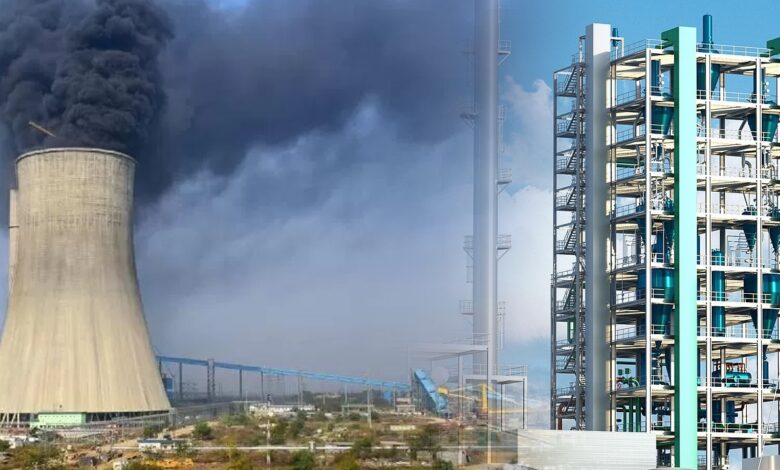
The Centre’s ₹37,500-crore push to promote coal and lignite gasification has received its first major boost, with Talcher Fertilisers Limited (TFL) and NTPC Limited submitting applications under the government’s flagship scheme.
The Ministry of Coal, in a PIB clarification issued on September 5, said the two public-sector companies had already submitted their applications through the online portal. The clarification came after reports questioned whether the ambitious scheme had attracted any takers.
The government has made it clear that the first application window is still open until September 7, 2026, making any conclusion about the scheme’s response premature.
From burning coal to converting coal
The significance of the scheme goes far beyond the subsidy involved.
India is attempting to change the traditional role of coal — from a fuel primarily burnt for power generation to a feedstock for producing higher-value industrial products.
Coal gasification can convert coal into synthesis gas, or syngas, which can subsequently be used to manufacture products such as ammonia, urea, methanol and other chemicals.
For a country with large domestic coal reserves but significant dependence on imported natural gas and chemical feedstocks, the strategy has potentially far-reaching implications.
Why TFL matters
TFL’s participation is particularly important because its Talcher fertiliser project is itself based on coal gasification.
The project is designed to use domestic coal for the production of ammonia and urea, making Talcher one of the country’s most visible examples of an attempt to establish a commercial coal-to-fertiliser value chain.
Its application under the new scheme could therefore provide an important test of how effectively government financial support can accelerate coal-gasification projects that are already aligned with India’s fertiliser and energy-security objectives.
NTPC brings another dimension
NTPC’s application could broaden the story beyond fertilisers.
As India’s largest power-generation utility, NTPC’s entry into the scheme signals that coal gasification is increasingly being viewed as a potential industrial technology platform, rather than simply a niche clean-coal experiment.
If more large public-sector and private-sector companies follow, demand for suitable domestic coal could eventually emerge from sectors beyond conventional thermal power.
A new opportunity — and a challenge — for Coal India
This could have major implications for Coal India and its subsidiaries, including BCCL.
Coal India’s traditional business model is overwhelmingly linked to supplying coal for power generation and other established industrial consumers. A large-scale gasification programme could create a new category of demand requiring coal with specific quality, consistency and technical characteristics.
That means the opportunity is not merely about selling more tonnes.
The bigger question is whether Coal India can develop the right coal-supply arrangements, beneficiation systems, logistics and quality assurance mechanisms required by gasification projects.
For BCCL and other coal-producing subsidiaries, the emerging gasification market could eventually become an important avenue for moving up the value chain — provided the economics work.
₹37,500 crore bet
The government has allocated ₹37,500 crore to promote coal and lignite gasification projects and aims to use public support to catalyse much larger investments in the sector.
The programme is also part of the government’s broader objective of expanding domestic coal gasification capacity and reducing dependence on imported feedstocks.
The applications from TFL and NTPC therefore represent more than two government companies entering a subsidy scheme.
They are the first significant indicators of whether India’s ambitious plan to transform coal from a fuel into an industrial feedstock can move from policy documents to commercial scale.
For Coal India, BCCL and the wider coal industry, the development deserves close attention.
Because if coal gasification takes off, India’s next coal market may not be only about how much coal can be mined – but what can be made from it.