

GST Council Recommends Scrapping Arrest Powers of Tax Officials: Major Relief for Small Entrepreneurs
Proposed reform seeks to shift GST enforcement away from the threat of arrest, while raising the prosecution threshold from ₹1 crore to ₹5 crore
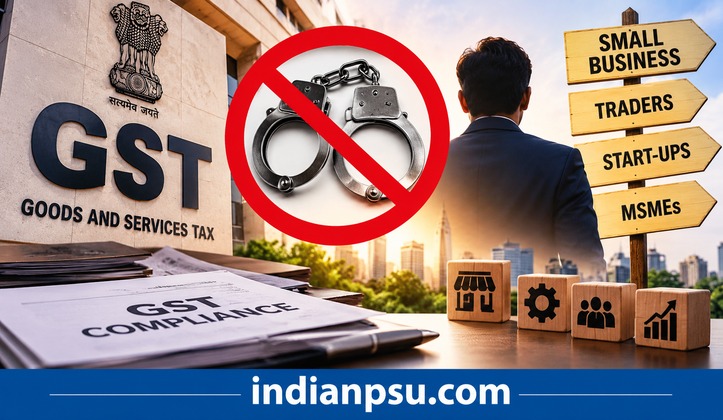
Small entrepreneurs, traders and business owners could get significant relief from the Goods and Services Tax (GST) enforcement regime following the GST Council’s recommendation to remove arrest provisions under the GST law.
The recommendation, announced at the Council’s 57th meeting on October 8, 2026, marks a significant proposed change in how tax authorities deal with businesses accused of GST-related offences. The Council has also recommended raising the threshold for prosecution from ₹1 crore to ₹5 crore and reducing the general penalty from ₹25,000 to ₹10,000.
Relief From the Fear of Arrest
For small businesses, the significance of the recommendation extends beyond tax calculations. It concerns the relationship between taxpayers and the enforcement machinery.
Under the existing GST framework, arrest provisions have been a source of concern for businesses facing allegations of serious tax offences. The proposed removal of these provisions could reduce the fear of coercive action and provide greater confidence to entrepreneurs dealing with tax disputes.
For a small business owner, a GST investigation can mean more than a financial liability. It can disrupt daily operations, affect business relationships and consume considerable time and resources.
Removing the power of arrest under GST would represent a major shift towards a less punitive enforcement framework.
Prosecution Threshold Raised to ₹5 Crore
The Council has separately recommended increasing the threshold for launching prosecution from ₹1 crore to ₹5 crore.
The proposed increase could reduce criminal exposure in cases involving amounts below the revised threshold, subject to the applicable provisions and exceptions. It does not, however, eliminate tax assessments, recovery proceedings or other lawful enforcement measures.
The reform signals an effort to distinguish tax compliance disputes from cases warranting criminal prosecution.
What It Means for Small Entrepreneurs
The proposed changes could benefit small businesses in several ways:
- Reduced fear of coercive action: The removal of GST arrest provisions could make the enforcement process less intimidating.
- Greater business confidence: Entrepreneurs may be better placed to focus on operations rather than the threat of criminal proceedings under GST.
- Lower compliance-related anxiety: A higher prosecution threshold could reduce criminal exposure in qualifying cases.
- More predictable dispute resolution: The broader reform agenda seeks to standardise notices and proceedings and simplify compliance requirements.
However, these measures would not excuse tax evasion, fraudulent input tax credit claims or deliberate violations of GST law.
A Shift Towards Trust-Based Tax Administration
The Council’s recommendations form part of a wider effort to simplify GST registration, returns, refunds and adjudication. The objective is to make tax administration more predictable while retaining the ability to pursue genuine violations.
For small entrepreneurs, the most important test will be implementation. The removal of arrest provisions must be reflected in the applicable legal framework before taxpayers can rely on it as an operative safeguard.
Until the required legal changes take effect, businesses should continue to comply with existing GST requirements and respond appropriately to notices and investigations.
The bottom line: Removing arrest powers would be a significant safeguard for businesses if implemented as recommended. It would not end GST enforcement, but it could change how the state exercises its authority over taxpayers.