
Union Petroleum Minister Hardeep Singh Puri Co-Chairs 2nd India-Arab Energy Dialogue at India Energy Week 2026
India and Arab nations reaffirm strategic energy partnership as LPG, LNG and crude imports surge; refinery expansion and policy reforms open new avenues for collaboration
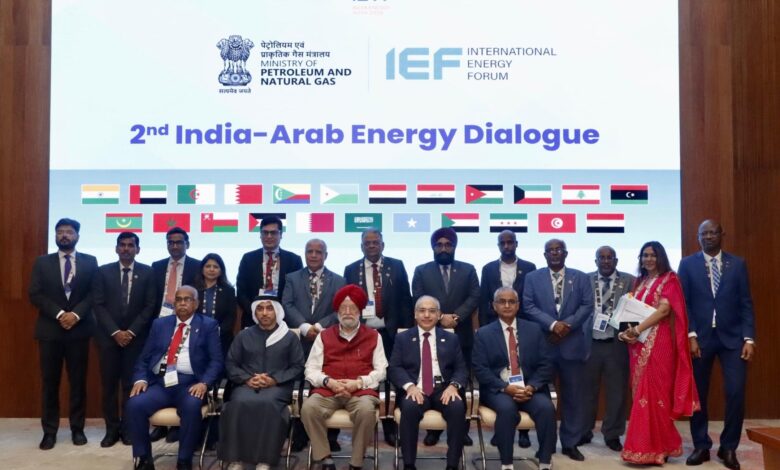
Union Minister for Petroleum and Natural Gas Hardeep Singh Puri co-chaired the 2nd India-Arab Energy Dialogue at India Energy Week 2026, alongside H.E. Dr. Sultan Ahmed Al Jaber, with the dialogue co-hosted by H.E. Jassim Al Shirawi, Secretary General of the International Energy Forum.
Highlighting the centuries-old relationship between India and Arab nations, Puri said the partnership has remained resilient even amid the pandemic, geopolitical disruptions and market volatility, with uninterrupted trade flows reflecting the strength of bilateral ties.
As India advances towards energy self-sufficiency and green transition under the leadership of Prime Minister Narendra Modi, the Minister noted that the country currently imports over 95% of LPG, 60% of LNG and 47% of crude oil from Arab League nations. At the same time, India exports over USD 9.2 billion worth of petroleum products to these countries.
Emphasising India’s growing refining strength, Puri said India is the fourth-largest refiner globally, with plans to increase refining capacity by over 20% by 2028, creating significant opportunities to deepen bilateral energy trade.
The Minister also briefed participating dignitaries on India’s recent transformational reforms, including amendments to the ORD Act, opening of previously restricted “No-Go” areas, and the launch of OALP Round-X. These policy initiatives, combined with India’s aggressive expansion of energy infrastructure, were presented as major enablers for future technical collaboration and investment.
Discussions further explored mutual partnerships in the shipbuilding sector, signalling a broader scope of cooperation beyond hydrocarbons, as India and Arab nations look to strengthen their strategic energy relationship across the value chain.