
ONGC CMD Race: Is Ranjit Rath the Right Choice to Lead ONGC?
The benchmark must be whether the candidate is demonstrably the best person available to lead ONGC

The race for the next Chairman & Managing Director (CMD) of Oil and Natural Gas Corporation (ONGC) has acquired fresh significance after the government widened the eligibility criteria for the top job, opening the field to a broader pool of experienced executives.
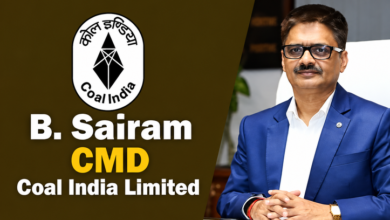
Among the prominent contenders is Dr. Ranjit Rath, Chairman & Managing Director of Oil India Limited (OIL), who has now entered the race for the second consecutive selection exercise.
Dr. Rath took charge of Oil India on August 2, 2022. He had also applied during the previous ONGC selection exercise, when more than a dozen candidates reportedly entered the race. That process did not culminate in interviews, while the government subsequently extended the tenure of incumbent ONGC Chairman and CEO Arun Kumar Singh by one year.
There is little question about Dr. Rath’s professional credentials. Oil India’s official profile describes him as a geoscientist with more than 28 years of experience spanning geosciences, exploration geology, strategy, business development and upstream asset management. Before taking over OIL, he headed Mineral Exploration & Consultancy Limited and held senior positions in other government-linked mineral and geological organisations.
But the ONGC CMD selection should ultimately answer a larger question:
Is the candidate merely qualified for the position—or is he demonstrably the best person available to lead ONGC?
That distinction matters enormously.
ONGC is a different scale of leadership challenge
Oil India is an important national energy company and a Maharatna CPSE. Dr. Rath has led the organisation for approximately four years and his experience at the helm is therefore directly relevant.
But ONGC presents a substantially different scale and complexity of leadership.
The company is India’s largest exploration and production enterprise and carries responsibilities extending well beyond conventional upstream operations. Its portfolio encompasses domestic exploration and production, deepwater operations, overseas assets, joint ventures and subsidiaries, technology-intensive projects and a growing push into new-energy businesses.
Indeed, the government’s own restructuring of ONGC’s board highlighted the need for enhanced production, accelerated exploration, technology adoption, efficient management of joint ventures and subsidiaries, effective capital allocation, overseas asset management and development of a leadership pipeline.
The next CMD will therefore need to operate simultaneously as an exploration-sector leader, corporate strategist, capital allocator, project manager and institution builder.
That is why occupying the CMD chair of another Maharatna company should be considered a strong credential—but not an automatic qualification for ONGC.
Technical expertise is important—but not sufficient
Dr. Rath’s background in geosciences and exploration is undoubtedly an asset for an upstream energy company.
His official profile records extensive experience in exploration geology, upstream asset management, strategy and business development, as well as involvement in projects linked to India’s strategic petroleum reserves and energy security.
However, the responsibilities of the ONGC CMD extend considerably beyond technical exploration expertise.
The position demands the ability to oversee enormous capital expenditure programmes, complex offshore and onshore operations, large workforces, industrial relations, major project execution, international investments, subsidiaries and joint ventures, regulatory relationships, financial performance and strategic diversification.
The selection committee should therefore distinguish between technical competence and enterprise-wide leadership capability.
The former is essential.
The latter could ultimately determine who succeeds at ONGC.
Four years at Oil India provide a measurable performance record
Perhaps the most important advantage the selection committee has this time is the ability to examine Dr. Rath’s performance over nearly four years at Oil India.
The question should therefore be straightforward:
What measurable change has taken place at Oil India under his leadership?
The answer should not be based primarily on speeches, announced investments or future ambitions. It should be built around measurable outcomes.
These could include:
- growth in domestic crude oil and natural gas production;
- reserve replacement and reserve accretion;
- exploration success rates;
- production from newly awarded blocks;
- project completion and cost management;
- overseas asset performance;
- return on capital employed;
- profitability and cash generation;
- shareholder value creation;
- growth of the integrated energy portfolio; and
- progress towards strategic production and energy-security objectives.
These parameters should then be compared objectively with the performance of ONGC and other major energy companies.
Such comparison would provide a much more meaningful basis for selection than designation alone.
Reserve replacement and production growth should be central
For any exploration and production company, one of the clearest measures of long-term leadership is the ability to replace reserves while increasing production.
Oil India’s growth strategy has involved exploration, development drilling, new acreage, overseas opportunities and expansion of its upstream footprint.
But for the ONGC appointment, the selection committee should look beyond the scale of announced plans.
The more important question is:
How effectively have plans been converted into reserves, production, projects and financial returns?
This is especially important for ONGC, where increasing domestic oil and gas production is closely linked to India’s energy-security objectives.
The next CMD will inherit the challenge of improving recovery from mature fields while simultaneously accelerating exploration in difficult and technically demanding areas, including deepwater prospects.
ONGC needs broader energy-sector leadership
ONGC is operating at a pivotal point in India’s energy transition.
The company must continue to increase conventional oil and gas production while also responding to the country’s changing energy mix.
That means simultaneously pursuing:
higher domestic production + natural gas expansion + enhanced oil recovery + deepwater exploration + overseas asset optimisation + new-energy investments + technology adoption.
This requires a combination of technical knowledge, financial discipline, project execution capability and strategic vision.
A candidate with a strong exploration and geoscience background should therefore be evaluated alongside candidates who may bring broader experience across finance, operations, international business, refining, petrochemicals, technology or diversified energy portfolios.
The objective should not be to determine whose résumé looks most impressive.
It should be to determine whose leadership record best matches ONGC’s future requirements.
Relaxed eligibility should mean tougher comparison
The government’s decision to widen the eligibility criteria has potentially made the selection process more competitive.
The maximum entry age has been raised to 59 years, while the selected candidate will initially receive a three-year term, extendable by up to two years following a performance review. The appointment is being processed through a search-cum-selection mechanism rather than the conventional route.
This wider eligibility is potentially positive.
It allows experienced executives who might previously have been excluded by age or service-related restrictions to enter the competition.
But a larger candidate pool makes objective comparison more—not less—important.
The selection committee should avoid any assumption that the sitting CMD of another Maharatna company is automatically the natural choice for ONGC.
The job is too important for that.
Previous shortlisting should not become a proxy for selection
Dr. Rath’s participation in the previous ONGC selection process is relevant because it establishes that his candidature has already attracted serious consideration.
But shortlisting is not selection.
A fresh process provides an opportunity to assess every contender against the requirements of ONGC as they exist today.
The circumstances facing the company have also evolved. ONGC’s priorities now include production growth, technology, capital allocation, overseas assets, joint ventures, new energy and the broader energy transition.
The selection committee should therefore assess candidates afresh rather than allowing previous consideration to become an implicit endorsement.
The real question: who is the best candidate?
There is no argument that Dr. Ranjit Rath is a serious candidate.
He heads a Maharatna oil and gas company and brings more than two decades of experience in geosciences, exploration, strategy and upstream asset management. His professional background is clearly relevant to ONGC.
But that is only the starting point.
The real question is whether his record makes him the strongest candidate among all those now available.
That determination cannot be made simply by comparing designations.
It requires a comparative assessment of leadership outcomes.
A performance scorecard is the way forward
The government has taken a positive step by broadening the candidate pool.
The next step should be to ensure that the selection is genuinely evidence-based.
Every candidate—including Dr. Rath—should ideally be evaluated against a common scorecard covering:
Production growth | Reserve replacement | Exploration success | Project execution | Financial performance | Capital efficiency | Overseas asset management | Technology adoption | Energy transition | Corporate governance | Human-resource leadership | Ability to manage large and complex organisations
Such a framework would make the process more transparent, competitive and outcome-oriented.
It would also ensure that the selection is based not on who currently occupies which chair, but on who has demonstrated the strongest ability to lead ONGC into its next decade.
ONGC deserves the best leader available
The importance of ONGC to India’s energy security cannot be overstated.
The next CMD will inherit a company facing the simultaneous challenges of raising domestic hydrocarbon production, replacing reserves, developing difficult resources, managing overseas assets, improving capital efficiency and preparing for an energy system that is steadily changing.
This is therefore not simply another PSU appointment.
It is a strategic leadership decision.
Dr. Ranjit Rath’s candidature deserves serious consideration. But so should every other credible candidate.
The benchmark should not be whether a candidate is eligible.
It should not even be whether a candidate is already heading another major PSU.
The benchmark must be whether the candidate is demonstrably the best person available to lead ONGC.
That is the standard a company of ONGC’s size, strategic importance and national responsibility deserves.
Editor’s Note: This version deliberately avoids presenting the piece as a judgment against Dr. Rath personally. The stronger editorial position is that every candidate—including an incumbent Maharatna CMD—should face the same objective performance test. The factual references on Rath’s tenure/profile and the revised ONGC selection framework have also been checked against current official/company and contemporary reports.